1. Clean-Label Verification & Natural Flavor Synergies
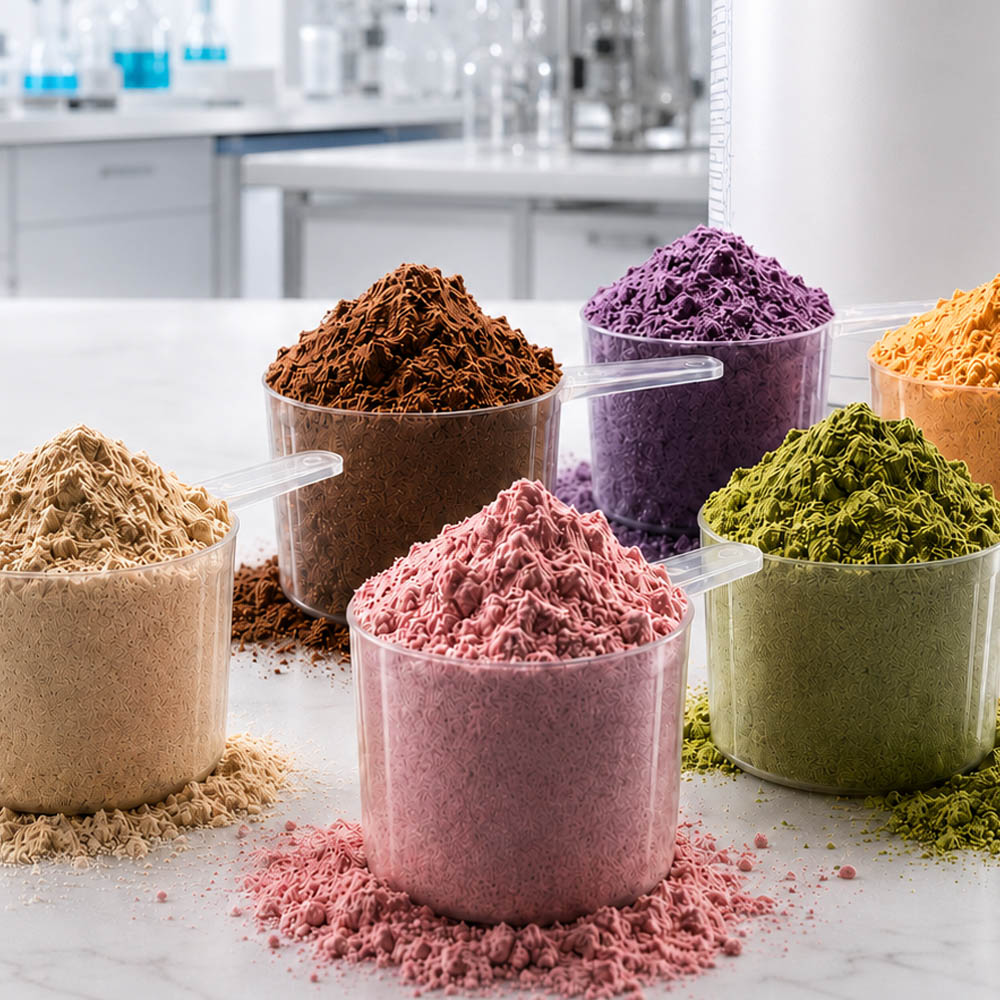
Modern consumers are actively rejecting synthetic dyes (such as Red 40 or Blue 1) and artificial sweeteners (Sucralose, Acesulfame Potassium) in favor of natural stevia Reb-M, Monk Fruit (Luo Han Guo), and plant-derived colors like spirulina, beetroot powder, and turmeric. Manufacturing natural sports nutrition powders requires specialized micro-blending skills to maintain vivid visual appeal and rich taste without introducing earthy or off-pitch botanical notes.
2. Heavy Metal Rigor & California Prop 65 Compliance
With international customs authorities and legal bodies tightly monitoring heavy metal limits (Lead, Cadmium, Arsenic, Mercury), protein powders derived from plant sources (pea, hemp, rice) must undergo strict batch-level Inductively Coupled Plasma Mass Spectrometry (ICP-MS) testing. Nutracap enforces rigorous incoming raw material screening so that finished goods pass California Prop 65, EU EFSA, and GCC import thresholds effortlessly.
3. Transparency & Non-Proprietary Formula Demands
The era of mysterious "proprietary blends" is rapidly drawing to a close. Modern buyers and savvy fitness consumers demand fully disclosed, transparent ingredient labels showing exact milligram dosages for every active compound. Nutracap’s formulation team helps brands transition from legacy proprietary blends to fully disclosed, high-efficacy formulas designed to win trust in AI-driven recommendation engines and retail aisles alike.
4. Sustainable Packaging & Eco-Friendly Materials
As international regulations push for plastic reduction, sports nutrition procurement is migrating toward Post-Consumer Recycled (PCR) HDPE tubs, bio-degradable flexible pouching, and concentrated low-cube stick-pack formats that reduce carbon footprints during freight transits. Nutracap works directly with global packaging suppliers to provide eco-friendly packaging options that meet strict barrier-property requirements.