Direct factory bulk supply engineered with bio-encapsulation technology for maximum viabilities under Mercosur trans-continental distribution.
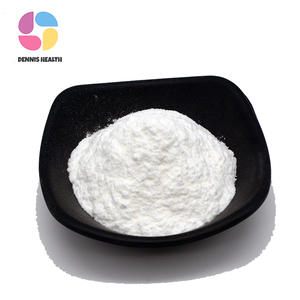
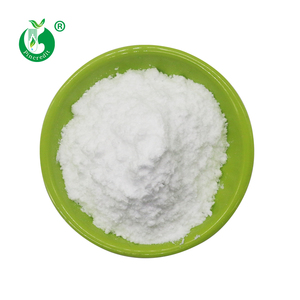
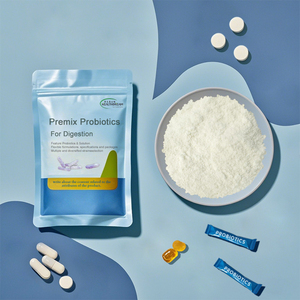
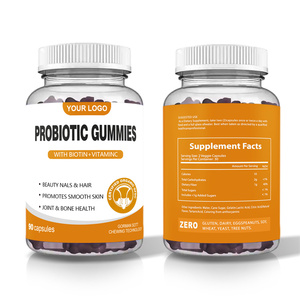
The Argentine market for microbial raw materials and finished nutraceutical products is undergoing a profound structural shift. Driven by expanding industrial agricultural operations across the Pampas region and heightened domestic health consciousness in urban epicenters like Buenos Aires, Córdoba, and Rosario, B2B procurement managers face dual demands: securing highly stable active strains and navigating strict Mercosur regulatory frameworks.
Procuring bulk probiotics from premier Chinese manufacturing hubs provides Argentine enterprise buyers with a crucial competitive advantage—leveraging state-of-the-art strain lyophilization (freeze-drying) techniques and cost-effective scaling while maintaining rigorous international quality standards.
Regulatory Compliance Key (ANMAT & SENASA): Importing active microorganisms into Argentina requires specialized handling. Human dietary supplements and functional food ingredients fall under the purview of ANMAT (Administración Nacional de Medicamentos, Alimentos y Tecnología Médica) via the Código Alimentario Argentino (CAA). Conversely, biological soil regenerators and bio-fertilizers require registration with SENASA (Servicio Nacional de Sanidad y Calidad Agroalimentaria). China's leading export factories provide complete, English-Spanish bilingual dossiers including strain identification by 16S rRNA gene sequencing, Certificate of Analysis (COA), non-GMO attestations, and heavy metal/microbiological safety screens essential for smooth customs clearance under SEDI (Sistema de Importaciones de la República Argentina) protocols.
Shipping biological materials from Asia across tropical equatorial maritime routes to South America presents severe thermal challenges. Standard unencapsulated probiotic strains suffer exponential log-reductions in colony-forming units (CFU) when exposed to relative humidity above 60% or temperatures exceeding 25°C. Advanced Chinese factories utilize triple-layer microencapsulation combining trehalose, sodium alginate, and resistant starch matrices.
| Strain Classification | Standard Freeze-Dried Loss (25°C / 24 Mo) | Triple-Layer Bio-Encapsulated Loss | Target Gastric Survival Rate (pH 2.0) | Primary Application Sector |
|---|---|---|---|---|
| Lactobacillus Plantarum | -1.85 Log CFU/g | -0.22 Log CFU/g | 94.6% | Gut Health, Functional Foods, Silage |
| Bifidobacterium Infantis | -2.40 Log CFU/g | -0.35 Log CFU/g | 91.2% | Infant Nutrition, Maternal OTC Formula |
| Lactobacillus Fermentum | -1.90 Log CFU/g | -0.18 Log CFU/g | 96.1% | Immunomodulation, Women's Health |
| Soilbium Bio-Complex | -0.95 Log CFU/g | -0.05 Log CFU/g | 99.0% (Soil Acid Tolerance) | Agri-Regeneration, Soybean/Maize Crop |
Tailored probiotic formulations designed to meet specific agricultural, nutritional, and industrial demands of South American markets.
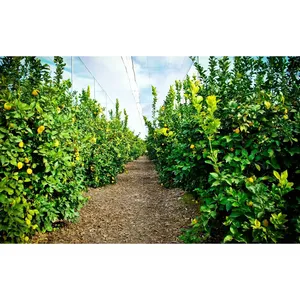
Argentina’s agricultural heartland relies heavily on bio-fertilization. Products like SOILBIUM utilize resilient bacterial consortiums to restore nitrogen fixation, solubilize soil phosphorus, and reverse topsoil degradation caused by intensive soybean and cereal monoculture.
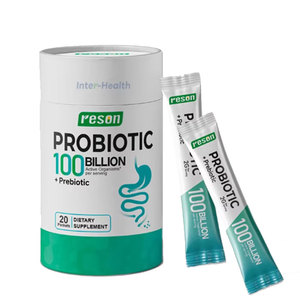
High-potency single strains and multi-species premixes (e.g., Lactobacillus plantarum and Bifidobacterium infantis) for local pharmaceutical brands formulating capsules, stick packs, and sachets for digestive and immune health.
Custom freeze-dried direct-vat set (DVS) strains designed to withstand acidification processes in Argentine yogurt, fermented milk products, and plant-based prebiotic beverage production hubs in Santa Fe and Córdoba.
Modern Argentine consumers demand alternative delivery forms. Pectin-based, heat-stable probiotic gummies incorporating Lactobacillus fermentum provide shelf-stable solutions for retail pharmacy chains without requiring refrigeration.
End-to-end contract manufacturing, rigorous quality controls, and customized logistics designed for seamless international trade.
Our facilities house pharmaceutical-grade industrial freeze-dryers with continuous automated temperature monitoring. We achieve moisture levels below 3.0% ($a_w < 0.15$), securing ultra-high viable cell counts that retain viability across long maritime transport corridors to Buenos Aires.
From custom strain blending to finished packaging formats—capsules, blister packs, aluminum foil sachets, or pectin gummies—our internal R&D team creates precise custom formulas tailored to your brand’s claim specifications and target dose parameters.
We provide full technical documentation to our Argentine partners: strain isolation certificates, genomic characterization maps, stability study data, allergens reports, Heavy Metals & Microbe lab tests, and Certificate of Free Sale (CFS).
Bulk probiotic powders are sealed inside heavy-duty multi-layer aluminum vacuum bags purged with high-purity nitrogen gas, placed inside insulated fiber drums equipped with continuous data loggers to guarantee zero moisture ingress during ocean freight.
Whether launching a pilot product market test in Latin America or placing multi-ton recurring bulk orders, our flexible manufacturing lines accommodate low initial Minimum Order Quantities (MOQs) without sacrificing cost efficiency.
Every single production batch undergoes strict quality control. Incoming raw materials, intermediate fermentations, and final packaged lots are tested both in-house and verified by accredited third-party laboratories (SGS/Eurofins).
In modern probiotic manufacturing, genus and species level identification are no longer sufficient for regulatory approval by international health authorities. ANMAT registration dossiers increasingly demand strain-level characterization to guarantee therapeutic safety and functional efficacy. Our production facility employs whole-genome sequencing (WGS) and 16S rRNA gene alignment to map every strain in our bank, including Bifidobacterium infantis and Lactobacillus plantarum.
This genomic verification ensures that exported bulk powders contain exact, non-pathogenic, antibiotic-susceptible strains that possess documented adherence capabilities to human intestinal epithelial cells and high tolerance to bile salts ($0.3\% \text{ oxgall}$) and gastric fluid ($pH\ 2.0$).
For Argentine importers storing bulk materials in warehouse environments across varying humidity zones (such as coastal Buenos Aires vs. arid Mendoza), controlling water activity ($a_w$) is critical. Water activity measures the unbound water available for chemical reactions within the powder matrix. While traditional moisture content measures total water, $a_w$ directly correlates with bacterial death rate over time.
Technical Benchmark: Our factory maintains a strict manufacturing threshold of $a_w \le 0.12$ at the time of primary packaging. Combined with desiccant-integrated aluminum foil barriers and temperature-controlled storage ($< 4^\circ\text{C}$ pre-shipment), strain degradation rates are capped at less than $0.05 \text{ log CFU/g}$ per month under standard ambient holding conditions.
Navigating international B2B payments and trade financing in Argentina requires adaptable supply chain partners. Given fluctuating foreign exchange mechanics and import licensing procedures (such as SEDI approvals and central bank dollar allocations), our export department works closely with Argentine procurement teams to offer flexible commercial arrangements.
We provide extended pro-forma validity periods, phased shipping schedules, split container options, and precise customs harmonized system (HS) coding (e.g., HS 3002.90 for microbial cultures) to prevent customs hold-ups at Port of Buenos Aires or Ezeiza International Airport.
Everything you need to know about bulk probiotic sourcing, regulatory documentation, logistics, and quality assurance.
We supply a comprehensive regulatory package tailored for Argentine import approval. This includes a detailed Certificate of Analysis (COA) for every lot, 16S rRNA Strain Identification, Quantitative Viability Assays (CFU/g), Heavy Metal & Microbiological Safety Testing, Non-GMO Certification, Allergen-Free Statements, ISO 22000 / cGMP Compliance Certificates, and a Certificate of Free Sale (CFS) legalized for international trade.
Bulk powders are vacuum-sealed within double-layer heavy-duty aluminum foil bags purged with inert nitrogen gas to eliminate oxygen and moisture. These are packed into sturdy fiber drums and shipped via Reefer (Refrigerated) containers maintained at $2^\circ\text{C} - 8^\circ\text{C}$ throughout transit. We also include continuous USB temperature and humidity data loggers inside the shipment for quality audit upon arrival in Buenos Aires.
Our MOQs are structured to accommodate both emerging brand pilots and enterprise scaling. For raw single-strain bulk powders, MOQs start as low as 10 kg. For custom multi-strain powder blends or pre-formulated premixes, the MOQ is typically 25 kg. For finished private label formats like probiotic gummies or capsules, minimums start around 500 to 1,000 units per SKU depending on bottle packaging specifications.
Yes. Our bio-agricultural R&D lab custom-formulates microbial consortia specifically tailored to target soil conditions in South America. We blend spore-forming Bacillus species, Pseudomonas, and specialized bio-regenerative strains capable of colonizing rhizosphere environments, surviving pesticide residue exposure, and accelerating crop residue decomposition in soybean and corn agricultural fields.
Our microencapsulated, low-water-activity ($a_w < 0.15$) freeze-dried powders carry a guaranteed 24-month shelf life when stored in sealed original packaging at temperatures below $25^\circ\text{C}$. For optimal long-term potency retention above 2 years, storage at cool temperatures ($4^\circ\text{C}$ or below) is recommended.
Standard manufacturing and batch testing lead times require 2 to 3 weeks following formula approval. Ocean freight transit from major Chinese ports (Shanghai/Ningbo) to Port of Buenos Aires typically takes 30 to 40 days. Air freight options are available for urgent raw material requirements, taking 5 to 7 days transit time.
Looking to source high-viability bulk powders, bio-agricultural regenerators, or ready-to-sell dietary supplements for the Argentine market? Connect directly with our technical export engineering team today.