
1. Strategic Overview: Tablet Pressing & Contract Manufacturing for New Zealand Brands
The health, wellness, and personal care markets in New Zealand (Aotearoa) have experienced a profound evolution. Consumers across Auckland, Wellington, Christchurch, and regional hubs are actively seeking clean-label, high-efficacy solid dosage forms—ranging from dietary supplements and sports nutrition chewables to solid toothpaste tablets and beauty-from-within collagen pressings. For brand owners, pharmaceutical startups, and retail chains operating in New Zealand, selecting the right contract tablet compression factory is a central driver of long-term unit economics, brand equity, and regulatory compliance.
Manufacturing dietary supplements and solid dose products for the New Zealand territory requires navigating strict regulatory oversight under Medsafe (New Zealand Medicines and Medical Devices Safety Authority), the Dietary Supplements Regulations 1985, and imported food standards managed by the Ministry for Primary Industries (MPI). Partnering with an international cGMP-compliant and FDA-registered contract manufacturer bridges the gap between state-of-the-art compression engineering and seamless Pacific shipping logistics.
Key Market Dynamics Driving Tablet Pressing Demand in New Zealand
- Growth of Eco-Friendly Solid Formats: High demand for waterless cosmetics, eco-friendly tooth tabs, and compressed cleansing tablets driven by New Zealand's strong zero-waste and environmental sustainability ethos.
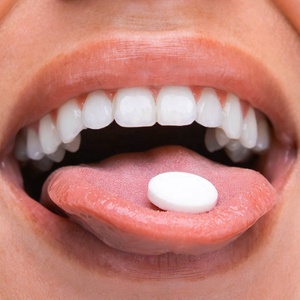
- Precision Nutra-Dosing: Shift away from traditional liquid mixtures toward exact dosage unit tablets, chewables, and sublingual formulations ensuring extended active shelf-life.
- Botanical & Native Actives Integration: Emerging requirements to press complex botanical actives (such as Manuka extracts, bioflavonoids, marine collagen, and native botanical oils) without thermal degradation.
- Supply Chain Resilience: Need for reliable, scalable contract factories capable of handling low initial Minimum Order Quantities (MOQs) for product testing, scaling up smoothly to multi-million tablet commercial orders.
2. Engineering Excellence: The Tablet Compression & Tooling Science
Tablet pressing is far more than compressing powder into a mold; it is a delicate equilibrium of mechanical engineering, powder rheology, binder physics, and tool geometry. Our manufacturing facility utilizes high-speed automatic rotary press machinery equipped with pre-compression and main-compression force transducers. This dual-compression mechanism forces entrained air out of the powder bed before final compaction, eliminating common manufacturing defects such as cap displacement, lamination, and edge chipping.
| Compression Methodology | Ideal Raw Material Profile | Technical Advantage | Common NZ Market Application |
|---|---|---|---|
| Direct Compression (DC) | Free-flowing, crystalline active powders (e.g., Vitamin C, Minerals) | Eliminates heat & moisture exposure; lowers production cost and cycle time | Daily Multivitamins, Sublingual B12, Eco Toothpaste Tabs |
| Fluid Bed Wet Granulation | Coarse or poorly compressible botanical powders & plant extracts | Enhances particle binding, flowability, and tablet hardness uniformity | Herbal Formulations, Greens Complexes, Marine Collagen |
| Dry Roller Compaction | Moisture-sensitive or heat-sensitive active ingredients | Forms uniform granules via mechanical density ribboning without liquid solvents | Probiotic Blend Tablets, Enzyme Complexes, Effervescent Bases |
| Bi-Layer Compression | Incompatible active compounds or timed-release formulations | Separates distinct active layers; allows fast-release + slow-release profiles | Day/Night Immunity Tabs, Energy + Recovery Sports Supplements |
Strict In-Process Quality Assurance (IPQA) Protocol
During every tablet compression run destined for New Zealand export, our quality control technicians execute automated sampling every 15 to 30 minutes. Critical parameters include:
- Weight Variation Control (USP <905>): Electronic load cells verify individual and average tablet weight within ±2.5% strict standard deviation.
- Tablet Hardness & Thickness (N/kp): Multi-point hardness testing ensures structural integrity during high-speed packaging lines and cross-Pacific ocean shipping.
- Friability Testing (USP <1216>): Rotating drum friability chambers verify total mass loss remains strictly below 1.0%, guaranteeing tablets will not crumble inside bottles or blister packs.
- Disintegration & Dissolution Profiling (USP <2040>): Fully automated disintegration baths ensure active ingredients break down within target physiological windows (e.g., <15 mins for immediate release; <30 mins for chewables).
3. Specialized Product Applications Serving the New Zealand Market
Our OEM/ODM manufacturing capability extends across multiple high-demand product categories tailored for the unique consumer profile of the Southwest Pacific region.
A. Oral Care & Solid Cosmetic Tablets
Driven by New Zealand’s strong consumer push away from plastic tubes, solid toothpaste tablets (including PAP+ enamel whitening formulas, microcrystalline cellulose bases, and natural mint oils) represent one of the fastest-growing solid dose segments. Our low-moisture suite presses dust-free, pleasant-foaming oral tablets that maintain maximum shelf stability without requiring chemical preservatives.
B. Sports Nutrition & Active Lifestyle Chewables
Kiwi consumers are renowned for their outdoor and athletic lifestyles. We formulate and press high-palatability chewable tablets including BCAA/EAA complexes, Creatine Monohydrate chewables, and fast-absorbing electrolyte effervescent tablets. By utilizing custom flavor masking and natural sweeteners (such as Stevia and Thaumatin), we overcome bitter active notes to deliver superior mouthfeel.
C. Marine & Botanical Bio-Actives
New Zealand brands frequently emphasize clean marine actives (e.g., hydrolysed marine collagen peptides) and native botanicals. Extracting and tableting these hygroscopic actives requires specialized binder selection and humidity-controlled cleanroom pressing to prevent sticking, picking, or discoloration over time.
4. New Zealand Import Compliance, Documentation & Ocean Logistics
Importing manufactured supplements or solid personal care products into Auckland, Tauranga, or Lyttelton requires pristine regulatory documentation to pass customs clearance without delay. As a dedicated export manufacturer, we provide a complete regulatory packet with every production batch:
| Documentation Type | Regulatory Purpose | Standard Inclusion |
|---|---|---|
| Certificate of Analysis (COA) | Verifies physical specs, active potency, micro testing, & heavy metal safety | Mandatory for every manufactured batch lot |
| cGMP & FDA Registration | Proves manufacturing facility meets international Good Manufacturing Practices | Included in regulatory import dossier |
| Certificate of Free Sale (CFS) | Attests that the product is freely sold in the country of origin | Available upon customer request for customs entry |
| BSE/TSE & Allergen Statement | Certifies freedom from mad cow disease agents & declares allergen cross-contamination controls | Standard for all gelatin/capsule/tablet lines |
Optimized Freight Pathways to New Zealand
We work directly with international freight forwarders to coordinate FCL (Full Container Load) and LCL (Less than Container Load) ocean shipments directly to New Zealand ports, as well as expedited air freight to Auckland International Airport (AKL) for time-critical commercial launches. All wooden pallets utilized in export transport undergo ISPM-15 heat-treatment (HT) to clear Ministry for Primary Industries (MPI) biosecurity inspections effortlessly.