
ISO 13485 | FDA Registered
Explore audited manufacturing lines across medical devices, dietary supplements, clean beauty, pet health, food items, and industrial polymers.

In the contemporary landscape of global trade, cross-border procurement managers, healthcare brand owners, and industrial product buyers encounter a complex regulatory environment. When searching for China top FDA registered factories and suppliers, decision-makers must distinguish between basic administrative establishment registration and full regulatory product compliance. Under the United States Food, Drug, and Cosmetic Act (FD&C Act), facility registration with the U.S. Food and Drug Administration (FDA) is a mandatory baseline for foreign establishments exporting medical devices, dietary supplements, human food, animal food, cosmetics (under MoCRA), and specialized chemicals into North America.
However, achieving true supply chain security requires looking beyond a mere 10-digit FDA registration number or FEI (Facility Establishment Identifier). Top-tier Chinese manufacturers integrate international Quality Management Systems (QMS)—such as ISO 13485 for medical device injection molding, 21 CFR Part 111 cGMP for dietary supplements, and HACCP/FSMA guidelines for food ingredients—directly into their daily shop-floor operations. This comprehensive whitepaper explores the critical technical parameters, compliance frameworks, strategic OEM/ODM advantages, and future procurement trends governing high-performing FDA-registered suppliers in China.
Understanding specific statutory requirements prevents customs holds, Import Alerts, and compliance delays at U.S. Ports of Entry.
| Industry Sector | FDA Statutory Base | Key Manufacturing Standard | Mandatory Export Documentation | Audit Verification Point |
|---|---|---|---|---|
| Medical Molded Parts | 21 CFR Part 820 / QSR | Class 8 Cleanroom, ISO 13485 | 510(k) Clearance / Device Listing | Bio-burden, Particle counts, DHR |
| Dietary Supplements | 21 CFR Part 111 | cGMP, NSF / USP Compliance | Certificate of Analysis (COA), COFS | Raw material ID (FTIR/HPLC), Lot Trace |
| Empty Capsules (HPMC) | 21 CFR Part 107 / DMF | Pharmaceutical Grade cGMP | Drug Master File (DMF), Halal/Kosher | Disintegration speed, Heavy metals |
| Clean Skincare / Cosmetics | MoCRA (21 U.S.C. 364) | ISO 22716 / GMPC | Cosmetic Product Listing, Safety Attestation | Preservative Challenge Test, Micro-load |
| Processed Foods / Snacks | FSMA / 21 CFR Part 117 | HACCP, HARPC Standards | Prior Notice (PN), FSVP Importer COA | Thermal process validation, Allergens |
| Pet Nutrition & Chews | 21 CFR Part 507 | Animal Food cGMP / Preventive Controls | USDA-APHIS Export Permit, COA | Mycotoxin screening, Pathogen control |
From medical cleanroom precision to botanical chemistry and food safety—how Chinese factories achieve global competitive advantages.
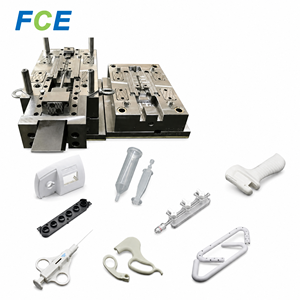
Leading Chinese medical manufacturers operate certified Class 8 cleanrooms (ISO 14644-1) equipped with electric high-precision injection machinery. Utilizing medical-grade USP Class VI resins, these facilities produce IV components, microfluidic chips, diagnostic cartridges, and surgical tool handles with tolerances held strictly under ±0.005mm.
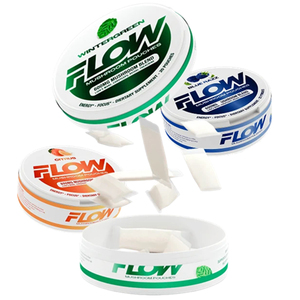
Sublingual absorption and nicotine-free oral pouch technologies represent a major growth vector. Advanced FDA-registered contract manufacturers leverage continuous micro-encapsulation to deliver stable, 100% plant-based mushroom extract profiles (Lion's Mane, Reishi, Cordyceps) combined with natural coffee berry caffeine for sustained cognitive focus.
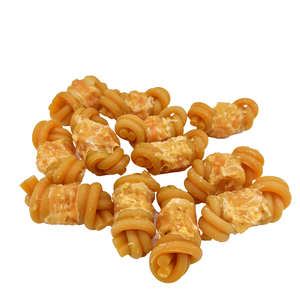
Combining FDA animal food safety rules (21 CFR Part 507) with cold-extrusion technologies preserves delicate enzyme structures, probiotics, and bioactive proteins. Grain-free, meat-rich dental chews undergo rigorous NIR spectroscopy for protein density and moisture control, preventing mold proliferation while promoting oral plaque reduction.
Under MoCRA standards, Chinese skincare factories prioritize barrier-recovery formulations containing biomimetic ceramides, ectoin, and multi-molecular hyaluronic acids. Operating in air-purified GMPC environments, these plants execute rigorous preservative efficacy testing (USP <51>) and heavy metal screening (ICP-MS).
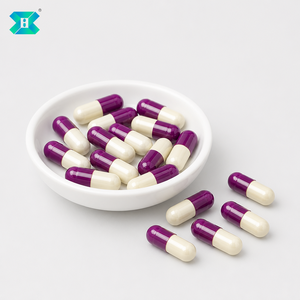
Hydroxypropyl Methylcellulose (HPMC) capsules derived from pine-wood cellulose satisfy strict vegan, Non-GMO, and Halal market demands. High-speed automated dip-molding lines enforce tight dimensional tolerances (Sizes 00, 0, 1, 2, 3), guaranteeing consistent filling speeds exceeding 99.8% on automated capsule filling machines.
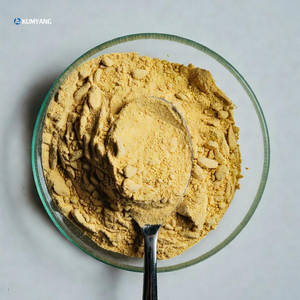
Chemical manufacturing facilities providing Azodicarbonamide (ADC/Cellcom AC) maintain rigorous FDA food-contact ingredient clearances. Controlled gas-evolution volumes, ultra-fine particle size distribution (3-5 microns), and high thermal stability make these foaming agents ideal for food-grade PVC, EVA, and rubber matrices.
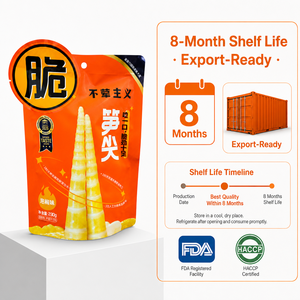
Thermal processing and automated sealing lines for preserved plant delicacies (e.g., spicy pickled bamboo shoots) adhere strictly to FSMA preventive controls. Solid-to-liquid weight ratios are stabilized at 70%+ crunchy solids, accompanied by low-pH pasteurization validation to ensure shelf-stable safety without synthetic additives.
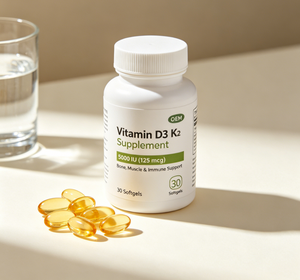
Nutraceutical factories specialized in lipid-soluble active ingredients—such as Synergistic Vitamin D3 (5000 IU) & K2 MK-7 (100 mcg)—utilize nitrogen-purged rotary-die encapsulation lines. This protects oxygen-sensitive vitamins, assuring 100% label potency throughout the entire 24-month product shelf life.
Integrating raw material intake, formulation chemistry, clean packaging, and regulatory release under a single facility umbrella.
Every single batch of raw material—from active pharmaceutical ingredients (APIs) to excipients—is tied to an indelible Master Batch Record (MBR). Supplier Certificates of Analysis (COAs) are validated via in-house FTIR identity testing prior to warehouse release.
Equipped with High-Performance Liquid Chromatography (HPLC), Gas Chromatography-Mass Spectrometry (GC-MS), and Atomic Absorption Spec, quality assurance teams verify potency, purity, and freedom from heavy metals (Lead, Arsenic, Cadmium, Mercury).
Facilitating international clearance with robust export documentation packages: Certificate of Free Sale (COFS), cGMP Compliance Certificates, BSE/TSE-Free Attestations, Halal Certifications, and complete FDA import prior notices.
Bridge time zones and communication barriers. Every project is assigned a senior technical account engineer responsible for formula optimization, artwork review, packaging sourcing, and shipping logistics from quote to delivery.
Anticipating regulatory updates, sustainable materials, and smart automation across Chinese export hubs.
Leading precision molding and capsule facilities are deploying high-speed CCD camera visual systems. Capable of scanning 2,000 units per minute, AI algorithms instantly reject micro-defects, surface flash, or color deviations before primary packaging.
Environmental regulations and ESG mandates are driving rapid adoption of post-consumer recycled (PCR) resins in medical packaging and biodegradable PHA/PLA compounds in functional chewables, reducing carbon footprints by up to 42%.
With U.S. FDA modernizing cosmetic regulations (MoCRA) and enforcing strict Foreign Supplier Verification Programs (FSVP), Chinese manufacturers are providing standardized digital compliance portals for direct importer audit access.
Global consumer demand for clean labels is pushing dietary supplement lines toward natural colorants (spirulina, beetroot), plant-derived excipients (rice hull extract instead of magnesium stearate), and non-allergenic delivery formats.
How international procurement directors evaluate Chinese OEM factories to ensure 100% compliance and reliability.
Verify factory FEI status and registration validity directly via official U.S. FDA establishment databases.
Request accredited ISO 13485, ISO 22716, or cGMP certificates issued by recognized third-party registrars (SGS, TUV, Intertek).
Obtain bench samples and perform independent lab testing (Eurofins, Covance) to validate COA claims against actual batch specs.
Inspect cleanroom particle counters, water purification systems (RO/EDI), air handling units (AHU), and raw material warehouse segregation.
Finalize U.S. Agent designation, review FDA Prior Notice protocols, and establish clear Quality Agreements prior to final mass production.
Expert answers addressing regulatory obligations, lead times, minimum order quantities (MOQs), and quality assurance.
FDA registration indicates that the manufacturing facility has formally registered its establishment details and product listings with the United States Food and Drug Administration pursuant to federal statutory requirements. It confirms that the plant is subject to FDA inspection and regulation. However, foreign buyers must also ensure the specific product line complies with cGMP, ISO standards, safety evaluations, and relevant product clearances (such as 510(k) for Class II medical devices or MoCRA listings for cosmetics).
You can request the factory's 10-digit Facility Establishment Identifier (FEI) or Registration Number and verify it directly through public U.S. FDA lookup databases (such as the Medical Device Establishment Registration database, Food Facility Registration portal, or DRLS for drug facilities). Authentic suppliers will also provide a formal FDA Registration Certificate issued by their designated U.S. Agent.
MOQs vary by product category and customization level:
• Medical Injection Molding: 5,000 – 10,000 units (depending on mold cavitation).
• Dietary Supplements & Softgels: 1,000 – 3,000 bottles for private label; 100,000 bulk softgels/capsules for custom formulas.
• HPMC Empty Capsules: 1 carton (approx. 100,000 shells).
• Skincare & Cosmetics: 1,000 – 5,000 sets depending on primary bottle tooling.
Standard production lead times range between 4 to 6 weeks following final sample confirmation, packaging artwork approval, and raw material analytical release. Custom tooling or specialized clinical-grade ingredient sourcing may add 2 to 3 weeks to the initial production schedule.
Yes. Qualified FDA-registered factories supply a comprehensive, lot-specific Certificate of Analysis (COA) detailing physical appearance, chemical assay potency, microbiological limits (E. coli, Salmonella, Staphylococcus), heavy metal counts, and moisture levels before goods leave the factory floor.
Key documentation includes the Commercial Invoice, Packing List, Bill of Lading, Lot-Specific COA, FDA Prior Notice Confirmation (for food/supplements), Manufacturer's cGMP Certificate, Certificate of Free Sale (COFS), and relevant FSVP documentation designated by your U.S. Import Agent.
Absolutely. Professional OEM/ODM manufacturers routinely execute Non-Disclosure Agreements (NDAs) and NNN Agreements (Non-Disclosure, Non-Use, Non-Circumvention) to safeguard customer intellectual property, proprietary ingredient ratios, and brand packaging designs.
Streamline your international supply chain with certified cleanroom production, rigorous cGMP compliance, and end-to-end turnkey OEM/ODM services. Contact our engineering and compliance specialists today to receive customized technical quotes and sample packs.