China’s cosmetics industry has become a powerful manufacturing base for global beauty brands. Its contract manufacturers now support formulation, testing, filling, packaging, and export preparation. However, choosing a partner requires more than comparing factory prices.
Cosmetics Contract Manufacturing works best when technical ability matches brand expectations. Strong companies should demonstrate GMP-aligned production, documented quality systems, stable raw-material sourcing, and reliable batch traceability. Their laboratories should handle stability testing, compatibility checks, microbial control, and product improvement. A factory may display impressive equipment, yet communication delays can still damage a launch. That detail is easy to underestimate.
Cosmetic chemist Perry Romanowski offers a useful reminder: “Cosmetics are chemistry, not magic.” His point matters when evaluating Chinese manufacturers. Effective products depend on controlled formulas, repeatable processes, and evidence-based decisions. Marketing promises cannot replace laboratory data.
This guide examines leading Chinese companies through practical criteria. These include manufacturing experience, formulation capabilities, certifications, minimum order quantities, packaging options, and international client support. It also considers whether suppliers communicate clearly during sampling and scale-up. Small details matter, such as how quickly a company answers a stability question or corrects a filling inconsistency.
No ranking is perfect.
A manufacturer suitable for a large skincare brand may not fit an emerging makeup label. Some companies excel at private-label speed, while others provide deeper customization and research support. Readers should verify current certifications, facility capacity, product claims, and regulatory responsibilities before signing an agreement. A polished website is not enough. Careful due diligence remains essential.
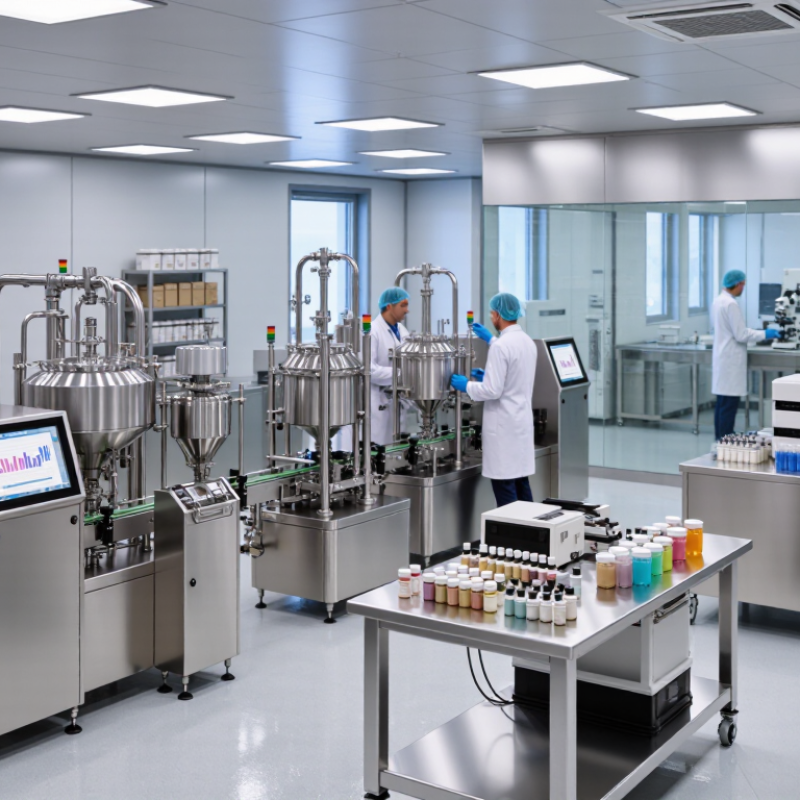
Cosmetics contract manufacturing in China means hiring a qualified factory to develop, produce, fill, and pack personal care products. The client usually provides a concept, target market, texture preference, and expected cost. The manufacturer may then support formulation, ingredient sourcing, stability testing, production, and packaging coordination.
A reliable process starts with clear technical documents. These may include product specifications, ingredient restrictions, packaging drawings, and quality standards. Experienced manufacturers can explain minimum order quantities, lead times, batch records, and testing procedures. They should also provide traceability for raw materials and finished goods. Ask for factory qualifications and audit evidence.
Samples need practical evaluation. A cream may feel smooth in a laboratory sample but behave differently after large-scale filling. Small details matter, including nozzle accuracy, seal strength, odor changes, and label readability. Not every factory offers the same technical depth. Communication can also become slow when specifications remain vague. That is a real risk.
Responsible production requires compliance with the destination market’s cosmetic regulations. Documentation, claims, safety assessments, and labeling should be reviewed by qualified professionals. Manufacturing partnerships work better when both sides discuss failures early. A beautiful package cannot repair weak quality control. I have found that simple reporting, retained samples, and agreed inspection points prevent many avoidable disputes.
It means hiring a qualified factory to formulate, produce, fill, and package personal-care products. A client usually provides the concept, target market, texture, and expected cost.
Prepare product specifications, ingredient restrictions, packaging drawings, and quality standards. Clear documents prevent confusion. They also support accurate quotations and realistic production schedules.
Test texture, odor, pH, viscosity, filling accuracy, seal strength, and label readability. A laboratory sample may behave differently during full-scale filling. That difference matters.
Request raw-material suppliers, batch numbers, test results, release decisions, and retained samples. Batch records should connect ingredients with finished products. Framed certificates alone prove little.
Review purified water testing, microbial limits, equipment cleaning, filling accuracy, and stability studies. Check calibration records and temperature logs. Small paperwork gaps can weaken a strong system.
They are essential. Safety assessments, ingredient restrictions, product claims, and labels must match destination-market rules. Qualified regulatory professionals should review the technical file before launch.
No. A polished showroom cannot confirm sanitation, worker training, or complaint handling. Inspect production areas, equipment records, trial batches, and corrective-action procedures.
They reveal production discipline, communication speed, packaging accuracy, and specification control. They may expose nozzle problems or changing textures early. That can save money later.
Define minimum order quantities, lead times, inspection points, quality standards, and change-control procedures. Discuss failures early. A beautiful package cannot repair weak quality control.
No system is flawless. Continuous audits, independent testing when risks are high, supplier reviews, and retained samples reduce avoidable disputes. Some weaknesses may still appear.
China’s Cosmetics Contract Manufacturing industry provides a flexible way for beauty businesses to develop and produce skincare, haircare, body care, and color cosmetics. Chinese manufacturers commonly support the full product process, including concept development, formula creation, ingredient sourcing, packaging selection, filling, labeling, and large-scale production. Many facilities also offer customized services for different product textures, functions, packaging formats, and market positioning, helping clients reduce development time and manage production costs efficiently.
When evaluating a Chinese cosmetics manufacturing partner, businesses should review technical capabilities, communication standards, production capacity, minimum order quantities, and sample development procedures. Quality control is equally important, including ingredient verification, stability testing, microbiological analysis, batch tracking, and documented manufacturing processes. A reliable partner should maintain suitable facility certifications, follow applicable safety and labeling requirements, and provide clear compliance documentation for target markets. The leading companies are distinguished by consistent quality, experienced research and development teams, transparent cooperation, responsive service, and the ability to scale products from initial testing to commercial production.