China’s sports nutrition sector has become a serious sourcing option for international brands, private labels, and contract buyers. Grand View Research estimated the global sports nutrition market at approximately USD 45 billion in 2023. Its report also projects continued growth through 2030, supported by fitness participation, protein demand, and convenient nutrition formats. That growth changes purchasing expectations.
Quality matters more than factory size.
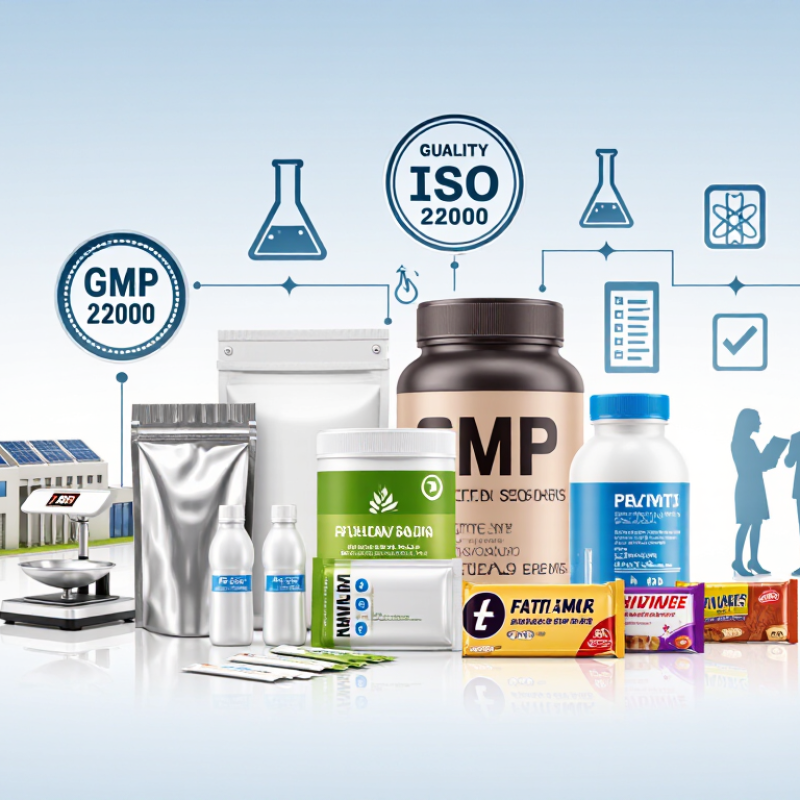
China’s leading manufacturers commonly provide whey and plant proteins, ready-to-mix powders, energy products, hydration formulas, and functional snacks. However, “top” should not mean the largest website or the lowest quotation. Buyers need evidence. Useful evidence includes GMP systems, ISO 22000 certification, HACCP controls, batch-level certificates of analysis, allergen management, and documented raw-material traceability. The Global Food Safety Initiative also emphasizes independently verified food-safety systems across international supply chains.
In practical Sports Nutrition Manufacturing, details reveal capability. A reliable supplier should explain how it controls moisture, prevents cross-contact, verifies flavor consistency, and stores finished goods. It should also support compliant labeling for the destination market. The International Society of Sports Nutrition has published evidence-based guidance on protein intake and exercise, reminding buyers that formulation claims require scientific discipline.
Market reports are helpful, but they are not factory audits. Rankings can be incomplete. Some excellent producers remain difficult to discover, while visible companies may outsource important steps. Buyers should therefore compare samples, audit findings, testing records, lead times, minimum order quantities, and communication quality. A small inconsistency in a vanilla powder may signal a larger process weakness. Careful verification remains the most dependable way to identify China’s best manufacturing partners.
The global sports nutrition market is entering a sustained growth phase. Grand View Research estimates a 7.9% CAGR from 2024 to 2030. Other industry reports, including Mordor Intelligence, place growth closer to 8–9%. Estimates differ because analysts classify supplements, functional drinks, and performance foods differently. The direction remains clear.
China is becoming an important export base for global buyers. UN Comtrade data for HS 2106 shows China among the leading exporters of food preparations. However, this code includes many products beyond sports nutrition. Treat it as a trade indicator, not perfect proof. Chinese manufacturers offer scalable production for protein powders, hydration mixes, amino-acid products, and nutrition bars. Many facilities also support private-label packaging, batch testing, and export documentation.
Reliable sourcing requires more than a low quotation. Buyers should review ISO 22000 or HACCP systems, allergen controls, microbiological reports, and heavy-metal testing. Independent laboratory verification is especially useful before shipment. A factory tour can reveal practical details, such as powder storage conditions and production-line hygiene. Certifications alone are not enough. Some factories present strong documents but weak traceability. This is where experience matters. Product formulas must also match destination-country rules, since permitted ingredients and claims vary widely. The market is growing quickly, but supply-chain decisions still need careful, sometimes uncomfortable, rechecking.
China-based sports nutrition manufacturers often support flexible formulas, scalable production, and export-ready packaging. For global buyers, the core product range usually includes protein servings with 20–30 g protein. This amount fits many post-training routines without making the product unnecessarily heavy. A 3–5 g creatine serving is also common. Ingredient identity and batch consistency matter more than attractive claims.
Details matter. During supplier audits, buyers should review raw material specifications, allergen controls, mixing records, and independent laboratory results. Amino acid products need clear ingredient quantities, not vague “advanced blend” language. Hydration formulas should show electrolyte levels, serving size, sweetener use, and total carbohydrates. A powder that dissolves quickly in a cold bottle is useful. A formula that settles at the bottom is not.
Reliable manufacturers can provide certificates of analysis, stability data, sample approvals, and traceable batch codes. Certifications such as GMP, HACCP, or ISO may support confidence, but buyers should verify their scope and validity. Labels must follow the destination market’s rules. Packaging language may also require careful review. Specifications sometimes change during scale-up, even after a successful sample. That risk deserves written control. Perfect consistency is difficult, and honest suppliers should explain possible variation instead of hiding it.
China’s sports nutrition manufacturers increasingly serve global buyers as demand expands. Grand View Research valued the global sports nutrition market at approximately USD 45.27 billion in 2023. That scale raises buyer expectations. GMP controls should cover weighing, blending, sanitation, line clearance, and batch release. In a reliable plant, operators record each step, not merely sign a final checklist.
HACCP identifies hazards before production begins. Typical controls include microbial testing, allergen separation, foreign-body prevention, and metal detection. ISO 22000 adds a documented food-safety management system, supplier assessment, traceability, and corrective action. The ISO Survey 2023 reported tens of thousands of ISO 22000 certificates worldwide, showing broad adoption but not automatic product quality.
Certification is evidence. It is not proof of every batch.
A credible COA should match the exact lot shipped. It should state test methods, specifications, results, units, production dates, and laboratory approval. Buyers should compare COAs with independent results for protein content, microbiological limits, heavy metals, and undeclared ingredients.
In practice, small details matter: sealed retention samples, calibrated scales, clean filling rooms, and readable batch codes. Site audits can reveal gaps that certificates hide. Some factories still treat paperwork as the product. That deserves skepticism. Supplier performance data, complaint rates, and corrective-action records provide stronger evidence over time.
The uncomfortable question remains: would the plant show the same controls during an unannounced visit?
Selecting a sports nutrition manufacturer in China requires more than comparing quoted prices. MOQ, lead time, testing, and batch variance often determine the real buying cost.
A practical MOQ should match your sales forecast, storage space, and cash flow. A low MOQ may carry higher unit costs, while a large MOQ can leave aging inventory. Ask for a written production schedule. Standard products may need 20–35 days, while custom formulas often require longer approval and testing. Delays can happen. Build a small buffer.
Testing must cover identity, purity, microbiological safety, heavy metals, allergens, and label accuracy when relevant. Request batch-specific certificates of analysis, not only a sample document. Independent laboratory verification adds confidence, especially for first orders. Factory visits, retained samples, and documented corrective actions also reveal operational discipline. Paperwork matters.
Define the acceptable 3–5% variance before signing. This may refer to net weight, ingredient assay, or filling quantity, and these are not interchangeable. Require the manufacturer to state the measurement method and rejection point. In practice, a narrow variance can increase waste or cost. I have seen buyers accept a percentage without defining its meaning. That mistake is avoidable. Compare three production records, not one. Ask how deviations are investigated, recorded, and communicated before shipment.
Typical procurement screening ranges: MOQ, lead time, testing turnaround, and acceptable batch variance
These planning benchmarks are intended for early-stage supplier screening and do not represent any specific company or brand. Buyers should verify product-specific MOQ, production schedules, independent laboratory testing, and batch specifications before placing an order. A practical control range for finished-product quantity variance is commonly set at approximately 3–5%, subject to the purchase contract and quality agreement.
For global buyers, compliance starts before production. A reliable manufacturer should maintain documented supplier approval, ingredient specifications, and risk assessments. In the United States, dietary supplement facilities must follow FDA cGMP requirements under 21 CFR Part 111. Labels should state serving size, ingredients, allergens, net contents, and responsible contact details. Avoid unsupported muscle-building or disease-related claims. They create regulatory risk.
EU requirements demand equal care. Food information should follow Regulation (EU) No 1169/2011, while nutrition and health claims require authorized wording. Rules may also differ between member states. Ask for batch-specific certificates of analysis covering identity, microbiological safety, heavy metals, and prohibited contaminants. Do not accept generic laboratory reports. They are weak evidence.
Traceability should work both ways. Each finished unit needs a readable lot code linked to raw materials, operators, test results, packaging records, and shipment details. A buyer should be able to identify affected cartons within hours, not days. Suppliers should also demonstrate one-step-back and one-step-forward tracking. In practice, paperwork is sometimes incomplete, especially during urgent orders. That is a warning, not a minor inconvenience. Request mock recalls, audit access, retained samples, and corrective-action records before signing a long-term agreement.
Many products provide 20–30 grams of protein per serving. This suits many post-training routines.
A typical serving contains 3–5 grams of creatine. Ingredient identity matters more than bold claims.
Review raw material specifications, allergen controls, mixing records, and independent laboratory results. Paperwork matters.
Amino acid products should list exact quantities. Hydration formulas should show electrolytes, serving size, sweeteners, and carbohydrates.
Test the powder in a cold bottle. It should dissolve quickly without leaving heavy sediment.
Request batch-specific certificates of analysis, stability data, sample approvals, and traceable batch codes.
Match the MOQ with sales forecasts, storage space, and cash flow. Standard production may take 20–35 days.
Define whether it concerns net weight, ingredient assay, or filling quantity. These measurements are not interchangeable.
Use written specifications and compare three production records. Samples can change during larger production.
Do not accept vague blend language or undefined variance. I have seen buyers overlook both. That deserves reflection.
China has become an important sourcing base for global sports nutrition, supported by strong production capacity and an expanding export role in a market growing at roughly 8–9% annually. Key product categories include protein formulas delivering around 20–30 g per serving, creatine products with approximately 3–5 g per serving, amino acid blends, and hydration solutions. Effective Sports Nutrition Manufacturing depends on reliable formulation, consistent raw materials, accurate dosing, and stable quality control.
For international buyers, Chinese facilities should be assessed through certifications and documentation such as GMP, HACCP, ISO 22000, batch-specific Certificates of Analysis, and complete traceability records. Practical selection criteria include minimum order quantities, production lead times, independent testing, packaging capabilities, and acceptable product variance, commonly targeted within 3–5%. Buyers must also confirm compliance with destination-market requirements, including FDA or EU rules where applicable, accurate labeling, permitted ingredient use, allergen declarations, and transparent supply-chain records. Careful verification helps reduce import risks and supports dependable long-term cooperation.