China remains a major sourcing base for vitamins, minerals, herbal extracts, probiotics, and sports nutrition products. The opportunity is substantial, but supplier quality varies sharply. Grand View Research estimated the global dietary supplements market at approximately USD 177.5 billion in 2023. Its report also projects continued growth through 2030. These figures explain the interest in Wholesale Dietary Supplements from China, yet they do not guarantee product reliability.
Experienced buyers look beyond a polished website or a low quotation. They check whether a factory can provide batch-specific certificates of analysis, complete ingredient specifications, stability data, and traceable production records. A real facility should also explain its quality system clearly. Useful evidence may include GMP certification, microbiological testing, heavy-metal results, allergen controls, and independent laboratory verification. The Council for Responsible Nutrition’s consumer research shows strong supplement usage in the United States, increasing the importance of consistent quality and transparent labeling.
A practical sourcing review should compare the supplier, not only the product sample. Verify business registration, manufacturing scope, export experience, minimum order quantities, packaging controls, and response speed. China’s National Medical Products Administration and applicable national standards should guide product and labeling checks. Requirements may also differ in the destination market, so one certificate is rarely enough. This part is easy to underestimate. A cheaper offer may reflect efficient production, or it may signal missing tests, weak documentation, or unstable raw materials. This guide explains how to investigate Chinese suppliers carefully, reduce avoidable risks, and build a more dependable wholesale purchasing process.
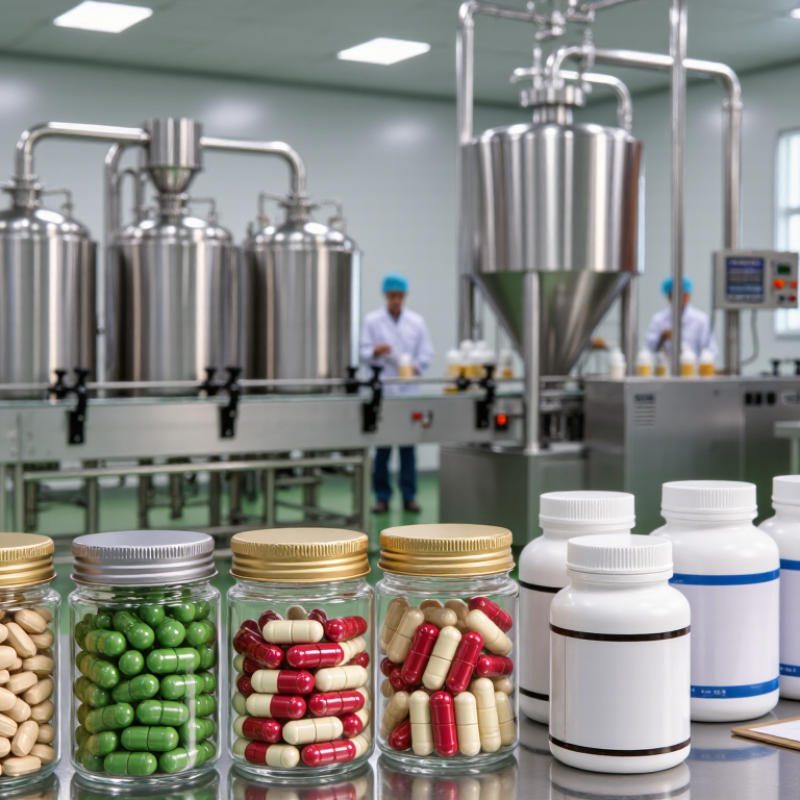
How to Find Top Wholesale Dietary Supplements in China?
Define Your Wholesale Supplement Needs and Product Standards
Before contacting Chinese suppliers, define the product brief in measurable terms. Specify dosage form, target users, serving size, flavor, packaging, and expected monthly volume. The global dietary supplements market reached approximately USD 177.5 billion in 2023, according to Grand View Research’s 2024 industry report. That scale creates opportunity, but it also creates crowded specifications and inconsistent quality.
Start with evidence, not attractive catalogs. Request complete ingredient lists, allergen statements, stability data, batch records, and certificates from independent laboratories. Testing should cover identity, purity, microbiological safety, heavy metals, and prohibited contaminants. Laboratories operating under ISO/IEC 17025 provide stronger confidence because their testing systems are independently assessed. Confirm the report matches the exact batch, not a sample from last year.
Be specific about acceptable variation. Set limits for active ingredients, moisture, tablet weight, fill volume, and packaging integrity. The Council for Responsible Nutrition reported continued consumer interest in wellness and preventive nutrition in its 2024 consumer survey, yet demand alone cannot define a reliable product. A popular formula may still fail your market’s labeling or stability expectations. I have seen buyers focus heavily on unit price and overlook humidity exposure during storage. That mistake is expensive.
Ask for pilot samples and retain them. Then compare the supplier’s documents with fresh test results. Specifications can be improved after discussion, but weak traceability remains a serious warning.
China’s dietary supplement industry is concentrated in several manufacturing regions. Guangdong, especially Guangzhou and Shenzhen, offers broad product development and export experience. Factories there often handle capsules, tablets, powders, and liquid formulas. The region also provides convenient access to ports, laboratories, and packaging suppliers.
Zhejiang, including Ningbo and Hangzhou, is known for efficient private-label production and flexible order quantities. Jiangsu, with cities such as Suzhou and Nantong, has stronger capabilities in process control, functional ingredients, and modern packaging. Shandong and Anhui also deserve attention, particularly for botanical extracts, vitamins, and large-scale production. Regional strengths can overlap, so location alone cannot prove factory quality.
A reliable buyer should inspect more than a factory website. Request current production licenses, third-party laboratory reports, batch traceability records, and clear allergen controls. Ask whether testing covers heavy metals, microbes, pesticides, and declared ingredient levels. Compare the audited address with the company registration details. Small inconsistencies matter. A polished factory visit may still reveal weak documentation later. This is where many sourcing plans become too optimistic. Review sample labels against destination-country rules, and confirm claims with qualified regulatory specialists. Product quality also depends on storage temperature, moisture control, and transport conditions. A capable supplier explains these details without avoiding difficult questions.
| Manufacturing Region | Major Industrial Areas | Typical Product Strengths | Common Manufacturing Formats | Supply-Chain Advantages | Best Fit for Wholesale Buyers | Key Due-Diligence Points |
|---|---|---|---|---|---|---|
| Guangdong | Guangzhou, Shenzhen, Huizhou, Dongguan and surrounding areas | Herbal products Vitamins Functional beverages Protein products | Tablets, capsules, powders, gummies, liquid drinks, sachets and ready-to-drink products | Large consumer-health market, mature packaging services, strong export orientation and convenient access to major South China ports | Private-label programs, fast-moving consumer products, export-oriented supplement lines and mixed-format product portfolios | Verify manufacturing qualifications, product testing, ingredient legality in the destination market and stability data for liquid products |
| Jiangsu | Manufacturing corridors around Nantong, Suzhou, Wuxi, Changzhou and nearby cities | Nutritional powders Softgels Mineral products Specialty nutrition | Softgels, hard capsules, tablets, powders, granules and nutrition bars | Strong pharmaceutical and food-processing ecosystem, established laboratory services and developed packaging-material supply | Buyers seeking consistent batch production, technical formulation support and medium-to-large purchase volumes | Check dosage uniformity, raw-material traceability, allergen controls and the manufacturer’s quality-management documentation |
| Zhejiang | Hangzhou, Ningbo, Shaoxing, Jinhua and surrounding industrial parks | Botanical extracts Gummies Beauty nutrition Probiotic products | Gummies, capsules, tablets, powders, oral liquids and small-format sachets | Strong e-commerce and consumer-product ecosystem, flexible packaging supply and efficient access to East China logistics networks | Online retail brands, customized formulas, trend-focused products and flexible packaging configurations | Confirm botanical identity testing, active-content testing, microbial limits and the stability of gummies or probiotic products |
| Shandong | Jinan, Qingdao, Yantai, Weifang and nearby areas | Collagen products Protein powders Marine ingredients Traditional nutrition | Powders, capsules, tablets, softgels, oral liquids and bulk ingredients | Important agricultural, marine and food-processing base with broad ingredient-processing capabilities and access to northern ports | Bulk nutritional ingredients, sports-nutrition products and high-volume powder or capsule orders | Review source documentation for animal or marine ingredients, heavy-metal results, origin records and allergen declarations |
| Shanghai and the Yangtze River Delta | Shanghai and adjacent areas of Jiangsu and Zhejiang | Specialty nutrition Clinical nutrition Premium formulations Imported ingredients | Capsules, tablets, powders, liquid sachets, bars and specialized nutrition formats | Strong international logistics, technical services, testing laboratories and access to experienced regulatory and formulation professionals | Premium products, technically complex formulas, international distribution and buyers requiring extensive documentation | Assess total landed cost, confirm export paperwork, review technical dossiers and verify that all claims comply with the target market |
| Fujian | Fuzhou, Xiamen, Quanzhou and surrounding areas | Tea-based nutrition Herbal products Functional drinks Snack-style supplements | Powders, tea sachets, tablets, capsules, liquid drinks and nutrition snacks | Well-developed food and beverage manufacturing base with strong packaging and export connections | Food-format supplements, beverage products, tea-related wellness products and consumer-friendly packaging | Confirm whether the item is regulated as food, a supplement or a health food in the destination country and check permitted claims |
| Hubei and Central China | Wuhan and surrounding manufacturing areas | Botanical ingredients Powdered nutrition Traditional formulations Bulk materials | Extract powders, capsules, tablets, granules and bulk premixes | Central geographic location, access to inland transport routes and growing food, pharmaceutical and botanical-processing capacity | Ingredient sourcing, powdered products and buyers balancing manufacturing cost with national distribution access | Verify botanical species, extraction ratio, pesticide residues, heavy metals and batch-to-batch consistency |
China’s supplement market rewards careful supplier verification. Grand View Research valued the global dietary supplements market at USD 177.5 billion in 2023. It also projects a 9.1% annual growth rate through 2030. This growth attracts capable factories and weak intermediaries. A low quotation proves very little.
Request the supplier’s business license and food production license first. Check the license scope, address, expiry date, and manufacturing categories. Then verify HACCP, ISO 22000, or GMP certificates directly with the issuing body. Certificates should match the actual factory, not only a trading office. The U.S. FDA’s 21 CFR Part 111 framework emphasizes specifications, testing, records, and quality control. These details matter when comparing Chinese production partners.
Capacity requires evidence, not confident promises. Ask for recent batch records, anonymized certificates of analysis, equipment lists, and monthly output by product form. During a video or physical audit, inspect weighing rooms, material storage, quarantine areas, and finished-goods labels. CRN’s 2023 Consumer Survey reported that 74% of U.S. adults use dietary supplements, raising the cost of quality failures. My own shortlist would remain provisional. A polished certificate can hide an outdated scope, and a large facility may still lack stable scheduling. Request a trial batch, review deviations, and compare test results with independent laboratory checks.
Finding top wholesale dietary supplement suppliers in China requires more than comparing catalog photos. I recommend requesting recent certificates of analysis, ingredient specifications, microbial results, and stability data. Ask whether an independent laboratory verified each batch. A serious supplier should explain testing methods clearly, not hide behind broad quality claims. Factory audits also matter. Check hygiene controls, weighing records, traceability, and storage temperatures.
Pricing needs a wider view. Compare the cost per serving, not only the quoted price per kilogram. Include testing, packaging, artwork, shipping, and possible reformulation fees. A low quote can become expensive after these additions.
Request three comparable quotations with the same dosage, packaging, and delivery terms. Pricing should be transparent.
Customization often affects minimum order quantities. A stock formula may require fewer units, while a new flavor, capsule color, or label design can raise the MOQ. Ask for pilot batches before committing to large production. Confirm the formula, allergens, shelf life, packaging materials, and label information in writing. Small details matter. I have seen buyers focus on unit price and overlook slow-moving inventory. That mistake can damage cash flow. Suppliers may also promise flexible customization, yet struggle with small revisions. Test their communication with specific questions and a sample timeline. Regulatory review should happen before printing labels, because market requirements differ by country. No supplier can replace your own due diligence.
When sourcing dietary supplements from China, sample evaluation should go beyond taste, color, and packaging. Request samples from the proposed production batch, not only a polished sales sample. Check serving size, dissolution, odor, capsule integrity, and visible contamination. Ask for a complete specification sheet and a batch-specific certificate of analysis. Review active content, microbiological limits, heavy metals, pesticides, and allergens. Independent laboratory testing is worth the cost for higher-risk ingredients. It can expose differences between paperwork and product. Small details matter. Test twice.
Negotiate terms in writing before production begins. Define minimum order quantity, lead time, payment stages, packaging tolerances, replacement rules, and inspection rights. Tie final payment to an agreed quality inspection, not merely shipment photos. Confirm whether the supplier can preserve batch records and provide traceability from raw material to finished goods. Request stability data when shelf life matters, because an attractive sample may change after months of heat and humidity. I have seen sourcing plans fail because “standard quality” meant different things to each party. That phrase is too vague.
Import compliance requires separate attention. Confirm the product’s legal classification in the destination market before ordering. Check permitted ingredients, dosage limits, claims, label language, allergen declarations, lot coding, expiry format, and required importer records. Customs documents should match the physical goods exactly, including quantities and ingredient descriptions. Keep purchase contracts, test reports, invoices, packing lists, and shipping records together. A customs broker can help, but the importer remains responsible for accuracy. Rules change, and online summaries can be outdated. Recheck official guidance before every shipment.
Specify dosage form, target users, serving size, flavor, packaging, and monthly volume. Clear numbers reduce confusion.
Request ingredient lists, allergen statements, stability data, batch records, and batch-specific laboratory reports. Check every page carefully.
Test identity, purity, microbial safety, heavy metals, active ingredients, moisture, and unapproved contaminants. Do not trust appearance alone.
Review the business license, food production license, factory address, expiry dates, and manufacturing categories. The address should match.
Request recent batch records, equipment lists, monthly output, and production schedules for your chosen product form. Promises are not evidence.
Inspect weighing rooms, raw material storage, quarantine areas, finished-goods labels, and recordkeeping systems. Look for clean, organized spaces.
Check serving size, dissolution, odor, capsule integrity, packaging, and visible contamination. Test twice when risk is higher.
Define minimum order quantity, lead time, payment stages, packaging tolerances, replacement rules, and inspection rights. “Standard quality” is too vague.
Confirm permitted ingredients, dosage limits, label language, allergen declarations, lot coding, expiry format, and importer records. Rules can change.
Request humidity controls, stability data, retained samples, and records linking raw materials to finished goods. My checklist is not perfect. Recheck it.
Finding reliable Wholesale Dietary Supplements in China requires a structured and careful sourcing process. Start by defining your target products, intended customers, ingredient preferences, packaging needs, and quality standards. Then research major manufacturing regions to identify suppliers with relevant experience and efficient logistics. Before cooperation, verify business qualifications, facility certifications, quality control systems, testing procedures, and production capacity. These checks can help reduce supply risks and ensure that products meet your expectations.
Next, compare suppliers based on product quality, pricing, customization options, lead times, and minimum order quantities. Request samples and evaluate their appearance, labeling, consistency, documentation, and test results before placing a larger order. During negotiations, clearly confirm payment terms, production schedules, packaging details, inspection procedures, and responsibilities for handling defects. Finally, review import requirements, labeling rules, customs documents, and applicable regulations in the destination market to support a compliant and reliable purchasing process.