0%

Choosing among the 10 best Supplement Packaging Solutions is not just a design exercise. The right pack helps protect product quality, support clear dosing, and withstand storage and shipping. A bottle, pouch, blister pack, or jar can each suit different products and supply chains. The details matter. A screw cap that feels secure in a showroom may loosen after repeated handling, while a flexible pouch may save freight space but require careful barrier testing.

Global buyers should compare materials, closures, seals, and supplier documentation before placing an order. Light-sensitive powders may need opaque packaging; moisture-sensitive capsules may need a stronger moisture barrier. Ask suppliers for relevant test data, production specifications, and samples that can be evaluated under realistic transport conditions. Check that labels can accommodate required product information in each intended market, and confirm requirements with qualified regulatory professionals. Rules differ by destination. Do not assume one label works everywhere.

Sustainability deserves a close look, too. Recyclability depends on local collection systems, material combinations, and actual disposal options—not just a green-looking label. And honestly, the lightest pack is not always the wiser choice. A small change in material can affect shelf life, breakage, and customer experience. There is no perfect solution. This guide compares practical options so buyers can weigh protection, cost, usability, and sourcing reliability. The best choice is the one supported by evidence, tested for the product, and suitable for the markets it will serve.
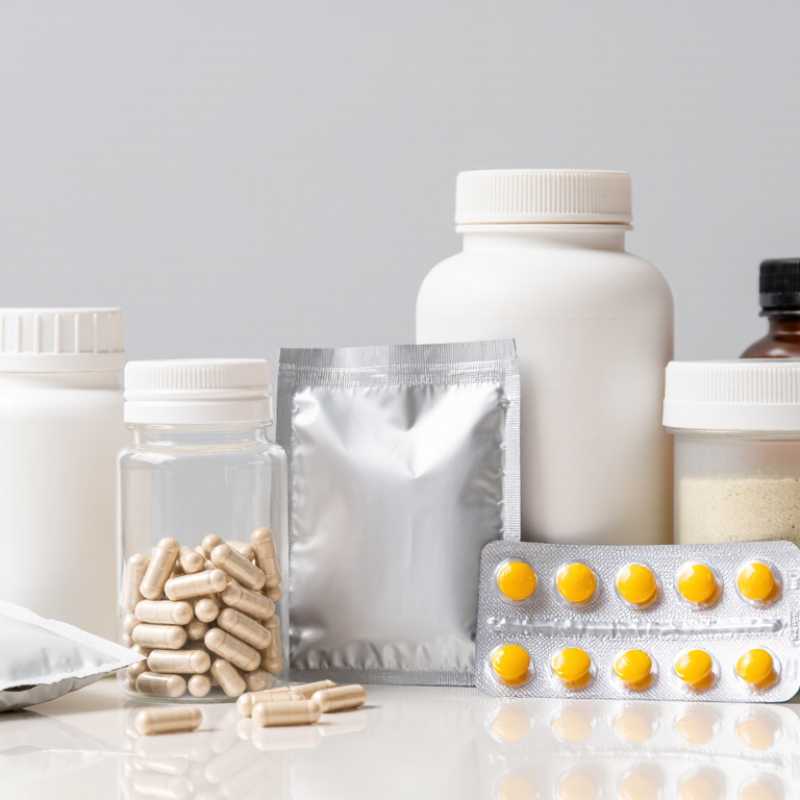
10 Best Supplement Packaging Solutions for Global Buyers

How Supplement Packaging Protects Product Quality and Consumer Safety

Supplement packaging protects quality by limiting exposure to moisture, oxygen, light, and handling. A well-fitted cap and intact inner seal can help keep tablets dry and reduce contamination risks after filling. For light-sensitive ingredients, an opaque or amber container may offer added protection. The right choice depends on the formula, shelf life, and storage conditions.

Small details matter. A desiccant can help control moisture in some bottles, but it must be suitable for the package and secured away from children. For powders, a moisture-resistant pouch with a reliable heat seal can reduce clumping during shipping. Tamper-evident features also help consumers notice whether a package may have been opened. Packaging alone cannot guarantee safety; good manufacturing, testing, and clear handling instructions remain essential.

Labels support safer use, too. Lot codes and readable expiry dates help buyers identify products and support traceability if concerns arise. Ink should remain legible after rubbing, and seals should withstand ordinary transport without hiding damage. Yet more layers are not always better: excess packaging adds material and can frustrate users. Selection should balance protection, ease of use, and the product’s actual risks, then confirm performance through suitable testing.

Key Criteria for Selecting Packaging for Global Markets

Global supplement packaging must protect product quality and travel reliably across different climates, handling systems, and retail environments. Buyers should compare moisture and oxygen barriers, light protection, closure integrity, pack weight, and compatibility with the formula. OECD’s Global Plastics Outlook (2022) reports that packaging generated about 40% of plastic waste in 2019. That figure makes material choice a practical concern, not just a sustainability claim. Small details matter. A loose cap or unreadable lot code can create problems after a long shipment.

Match the pack to the product and route. Opaque containers can help shield light-sensitive formulas, while desiccants and induction seals may support moisture control when testing confirms they are suitable. UNCTAD’s Review of Maritime Transport 2024 notes that shipping carries over 80% of global trade by volume. Transit can involve repeated handling, temperature swings, and long storage periods. No format is perfect. A lighter pouch may reduce shipping weight, yet offer less convenience for some users than a rigid container.

Labels need equal care. Confirm that required information, units, language, and batch details can be presented clearly for each destination market, with local regulatory review before production. Check barcode readability on curved surfaces and test labels after exposure to condensation or abrasion. Ask suppliers for material specifications, compatibility data, and transport-test results. A pilot shipment often reveals flaws that a clean sample cannot. That step takes time, but skipping it can cost more.

Ten Supplement Packaging Formats and Their Typical Uses

Dietary supplement packaging should match the product’s form, serving size, and shipping route. Grand View Research valued the global dietary supplements market at USD 177.5 billion in 2023, underscoring the scale of packaging decisions. CRN’s 2024 Consumer Survey found that 75% of U.S. adults use supplements. Demand is broad, but no single pack suits every buyer.

HDPE bottles suit capsules and tablets; amber glass bottles help limit light exposure for sensitive liquids. Blister cards separate doses and make remaining tablets visible. Stick packs carry single servings of powders, while sachets work for samples or travel portions. Stand-up pouches reduce shipping bulk for powder refills. Wide-mouth jars allow scooping gummies or powders, though repeated opening can expose contents to moisture. Effervescent tubes fit tablets that need dry, orderly storage. Liquid bottles serve syrups and drops; folding cartons protect primary packs and provide space for instructions. Bulk-lined drums are practical for ingredient shipments to contract manufacturers. Small details matter: a scoop wedged under a lid can frustrate users. A package that looks efficient on paper may still be awkward in daily use.

Packaging Materials, Closures, Labels, and Sustainability Options

Supplement packaging should protect product quality while remaining practical to ship, open, and store. For powders, HDPE or PET bottles are common options; moisture-sensitive formulas may need stronger barrier protection. Glass offers a sturdy feel, but added weight can increase freight demands. Material choice should follow product testing, not appearance alone.

Closures deserve equal attention. Screw caps with induction seals can provide visible evidence of opening, while desiccant canisters help manage moisture inside some packs. Labels need durable adhesives that hold through handling and temperature changes. Clear ingredient panels and batch details also help buyers check information quickly. Details matter.

For global shipments, confirm that packaging dimensions, label languages, and disposal instructions suit each destination market. A recyclable pack is not automatically recycled everywhere. Mono-material components may simplify sorting, while lightweighting can reduce material use; both still need performance checks. Ask suppliers for material specifications and test filled packs under realistic transport conditions. Test before scaling. There is no perfect format, and teams sometimes underestimate how a small cap or label change can affect filling-line speed.

10 Best Supplement Packaging Solutions for Global Buyers

Representative density of common packaging materials

Approximate material densities are shown in g/cm³; actual values vary by grade and construction. Density helps compare equal volumes of material, but does not indicate finished-package weight or environmental impact. Closures, labels, and local recycling infrastructure also affect packaging choices.

How Global Buyers Compare Suppliers, Costs, and Compliance

Global buyers should compare supplement packaging suppliers against the product’s needs, not just a catalog photo. A powder may need a wider opening and a moisture barrier, while softgels may require stronger light protection. Request samples and test them on your filling line. Check seal consistency, cap fit, and whether labels wrinkle on curved surfaces. Small flaws matter.

Compare the full landed cost, including tooling, minimum order quantities, freight, inspection, and storage. Ask suppliers to separate one-time charges from unit prices. A low quote can still be expensive. Not always. Review lead times and how the supplier handles damaged units or production delays. A clear answer is useful; a vague promise deserves follow-up.

Compliance needs vary by destination market and packaging material. Ask for current material specifications, relevant test reports, and documentation supporting any food-contact suitability claims. Confirm that label dimensions leave room for required local information, and have qualified regulatory staff review final artwork. Keep records of approved samples and change notifications. This step is often rushed, and that is a real risk: a resin, ink, or closure change may affect documentation even when the package looks unchanged.

10 Best Supplement Packaging Solutions for Global Buyers - How Global Buyers Compare Suppliers, Costs, and Compliance

Packaging Solution Typical Materials and Format Common Supplement Uses Protection and Practical Trade-Offs Cost and Logistics Comparison Supplier and Compliance Checks
1. HDPE Bottles High-density polyethylene bottle; commonly paired with a screw cap, induction seal, and optional desiccant. Tablets, capsules, powders, and products that benefit from an opaque container. Opaque walls help limit light exposure. Moisture and oxygen protection depend on the bottle, closure, seal, and any liner or desiccant used. Often a cost-conscious, lightweight option. Bottles can take more warehouse and shipping space than flexible packs. Check resin and colorant documentation, closure fit, seal integrity, bottle-wall consistency, and compatibility with the product. Confirm packaging specifications and controls for the destination market.
2. PET Bottles Polyethylene terephthalate bottle, available in clear or colored versions, with a compatible cap and seal. Tablets, capsules, gummies, and products where product visibility or a lightweight rigid pack is useful. Clear PET provides visibility but allows light exposure unless colored or otherwise protected. Barrier performance varies by bottle design and closure. Generally lightweight and easy to handle; compare bottle and cap costs with the required barrier and protection features. Request food-contact documentation where applicable, dimensional drawings, closure and liner specifications, and migration or compatibility evidence relevant to the intended use.
3. Amber Glass Bottles Amber glass container with a compatible screw cap, liner, and tamper-evident seal. Light-sensitive liquids, oils, tinctures, and selected capsules or tablets. Glass provides a strong barrier to gases and moisture; amber glass reduces light transmission compared with clear glass. It is breakable and heavier than plastic. Higher weight can increase freight and handling costs. Protective packing may be needed to reduce breakage in transit. Check glass quality, cap-and-liner compatibility, leak performance, breakage controls, and any destination-specific food-contact documentation.
4. PVC/PVDC Blister Packs Formed plastic cavities, commonly PVC with a PVDC coating, sealed with a lidding material such as aluminum foil. Tablets and capsules supplied in individual, visible doses. Individual cavities support dose separation and tamper visibility. Barrier performance depends on the forming and lidding materials; it is not equivalent to a high-barrier aluminum-aluminum blister. Convenient for unit-dose presentation. Tooling, forming equipment, and printed components can affect setup cost and production flexibility. Confirm the exact material structure, barrier data, seal integrity, cavity dimensions, and suitability for the product and markets where the pack will be sold.
5. Aluminum-Aluminum Blister Packs Cold-formed aluminum cavities sealed with aluminum lidding foil. Moisture- or light-sensitive tablets and capsules requiring strong individual-dose protection. Provides a high barrier to light, moisture, and gases when correctly formed and sealed. The pack is opaque, so contents are not visible before opening. Typically uses more material and specialized equipment than simpler blister formats; assess total pack and line costs. Request material-structure details, forming and sealing specifications, pinhole or leak-control procedures, and validated barrier information for the chosen design.
6. Single-Serve Stick Packs Narrow, sealed sachets made from flexible film laminates; structures may include plastic layers and an aluminum or metallized barrier layer. Powders, drink mixes, and granules intended for measured, portable servings. Compact single portions can limit repeated exposure after opening. Barrier performance depends on laminate structure and seal quality. Lightweight and space-efficient for shipping; filling-line requirements, printed-film minimums, and setup can affect order economics. Ask for the full laminate structure, barrier test data, seal-strength controls, tear-open performance, and food-contact documentation applicable to the destination market.
7. Flat Sachets Small, sealed flexible pouches made from paper, plastic, foil, or multilayer laminates. Powder samples, single-use servings, and trial-size products. Protection varies widely with the laminate. Foil-containing structures can provide stronger light and moisture barriers than basic paper or uncoated film structures. Low weight and compact storage are advantages; printed-film requirements and filling format should be checked against expected order volumes. Verify laminate layers, seal integrity, product compatibility, print and lot-code readability, and applicable food-contact requirements.
8. Resealable Stand-Up Pouches Flexible multilayer pouch, often with a zipper; barrier layers may include foil or metallized film. Powders, granules, and larger quantities of capsules or gummies. Uses less rigid material than many bottle formats and can be resealed. The zipper is not necessarily a hermetic seal; protection depends on the primary heat seal and laminate. Can store and ship efficiently when empty and may reduce pack weight. Filling, pouch size, zipper, and barrier-layer choices influence cost. Check laminate and zipper specifications, heat-seal performance, pouch dimensions, standing stability, and whether the pack preserves product quality after repeated opening.
9. Metal Containers Steel or aluminum tin, can, or container with a fitted lid or closure; an inner liner may be used. Powders, tablets, and products needing a rigid, light-blocking container or reusable presentation. Metal blocks light and can provide a strong barrier when the body, seams, liner, and closure are suitable. Dents, corrosion, and closure fit require assessment. Rigid and often heavier than flexible packaging. Compare container, liner, protective shipping, and storage costs. Confirm the metal and liner materials, corrosion resistance, seam or closure performance, and suitability for direct contact with the specific product.
10. Folding Cartons and Paperboard Sleeves Printed paperboard carton or sleeve, generally used around a primary bottle, blister, pouch, or sachet. Secondary packaging for retail presentation, instructions, grouping, and protection from scuffing or some light exposure. Can protect the primary pack during handling and provide space for information. A carton alone is not a moisture- or oxygen-barrier replacement for a sealed primary package. Lightweight and suitable for printed information; board grade, printing, finishing, and assembly affect cost and storage needs. Check print accuracy, legibility, traceability details, board specifications, and whether the carton is secondary packaging or intended for direct product contact.

Comparison note: Relative costs are indicative format-level comparisons, not supplier quotations; actual pricing depends on materials, dimensions, printing, order volume, tooling, filling, and freight. Compliance requirements vary by product and destination. For example, U.S. dietary supplement manufacturers must establish packaging and label specifications under 21 CFR Part 111, while food-contact materials in the EU are subject to applicable rules including Regulation (EC) No 1935/2004 and, for plastics, Regulation (EU) No 10/2011. Buyers should verify current requirements and obtain documentation for the specific packaging structure and intended use.

FAQS

How does packaging help protect supplement quality?

A tight cap and intact inner seal help limit moisture, oxygen, and handling exposure. Light-sensitive formulas may benefit from opaque or amber containers. Packaging helps, but it cannot guarantee safety.

When is a desiccant useful?

It can help control moisture inside some bottles and reduce tablet softening or powder clumping. Choose one suited to the package and keep it secured away from children. Not every formula needs one.

What packaging works well for powders?

A moisture-resistant pouch with a reliable heat seal can help keep powder dry during shipping. Bottles made from suitable materials are another option. Check the filled package under realistic transport conditions.

What should buyers check on caps and seals?

Check that caps fit securely and seals remain consistent across samples. Tamper-evident features help users notice possible opening. Small flaws matter. A cap change can affect production, too.

Which packaging material should teams choose?

Material choice depends on the formula, storage needs, and testing. Glass feels sturdy but weighs more. Lightweight bottles may reduce freight demands, but performance still needs checking.

What information should a clear label provide?

Readable expiry dates, lot codes, ingredient panels, and batch details support quick checks and traceability. Test whether ink stays legible after rubbing. Curved labels can wrinkle.

How should buyers compare supplier costs?

Compare unit prices alongside tooling, minimum orders, freight, inspection, and storage. Ask which charges are one-time costs. A low quote can still become expensive. Not always obvious.

How can teams balance sustainability and protection?

Lightweighting and mono-material components may reduce material use or simplify sorting. Recyclable packaging is not recycled everywhere. We sometimes focus too much on appearance; real-world performance deserves equal attention.

Conclusion

Choosing the right Supplement Packaging Solutions helps preserve product quality, support consumer safety, and make supplements easier to store, transport, and use. Global buyers should consider the product’s sensitivity to moisture, light, and oxygen, as well as serving size, ease of access, durability, and shipping needs. Common formats include bottles, jars, pouches, sachets, blister packs, stick packs, tubs, tubes, cartons, and single-dose containers, each suited to different products and usage occasions.

Material and closure choices can affect protection, convenience, and environmental impact. Buyers may compare plastics, glass, paper-based materials, seals, child-resistant or tamper-evident features, label readability, and options that reduce material use or improve recyclability. When evaluating suppliers, compare total costs, production capabilities, quality controls, documentation, and experience serving different markets. A careful review of these factors can help buyers select packaging that fits product requirements, customer expectations, and distribution plans.


Seraphina

Seraphina

Seraphina is a highly skilled marketing professional with a strong understanding of customer needs, market trends, and effective communication strategies. As a dedicated contributor to the company’s professional blog, she regularly creates insightful articles that explain industry developments,......