Choosing the best capsule supplement manufacturer in China requires more than comparing prices. It requires evidence, technical judgment, and careful factory verification. Capsule Supplement Manufacturing involves formulation control, capsule-shell selection, filling accuracy, testing, packaging, and traceability. Each stage can affect product consistency.
Joseph M. Juran, a respected manufacturing quality expert, said, “Quality does not happen by accident. It has to be planned.” This principle remains highly relevant when evaluating Chinese suppliers. A dependable manufacturer should provide clear GMP documentation, validated production procedures, qualified raw-material sources, and batch-specific testing records. Independent laboratory results can strengthen confidence, especially for identity, potency, microbiological safety, and heavy-metal limits.
Look beyond polished websites. Ask to review the production area, warehouse conditions, sample labels, and quality agreements. Check whether operators record humidity, temperature, line clearance, and equipment cleaning. Small details matter. A strong supplier should explain how it handles deviations, recalls, stability testing, and customer complaints. It should also communicate clearly about minimum order quantities, lead times, certifications, and export documentation.
No factory is perfect. That is an important reality. Even an experienced manufacturer may face delays, material changes, or communication gaps. The real question is how openly the company identifies and corrects problems. This guide examines practical methods for comparing manufacturers, verifying their capabilities, and reducing avoidable sourcing risks. The best partner is not always the cheapest option. It is the supplier that combines consistent quality, transparent records, responsive communication, and realistic production promises.
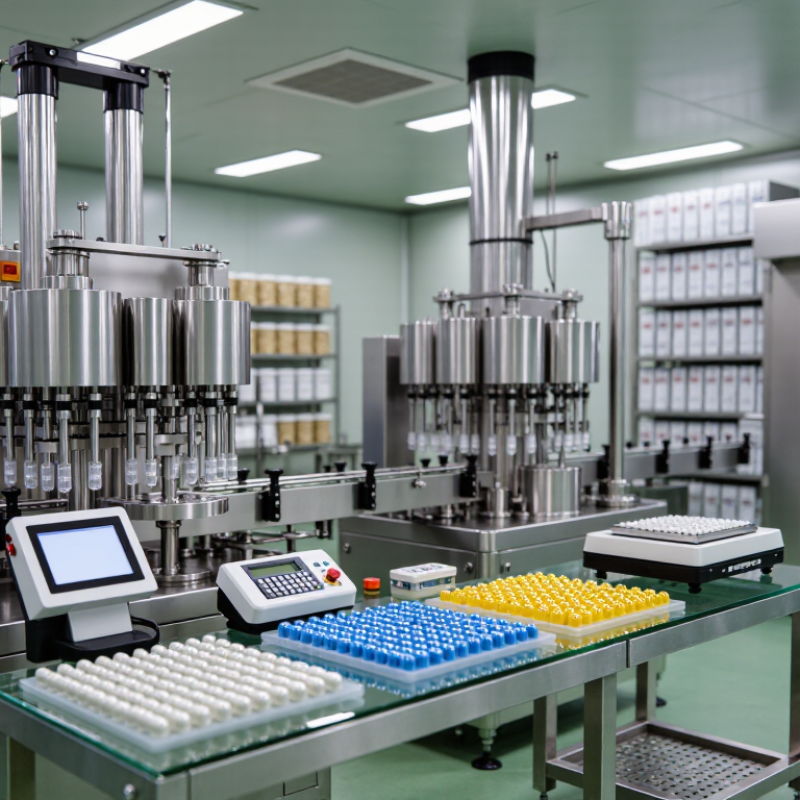
What Is the Best Capsule Supplement Manufacturer in China?
The best capsule supplement manufacturer is not always the cheapest option. It should combine technical knowledge, stable production, and clear communication. In real supplier evaluations, quality begins with documented raw material control. Each ingredient should have identity testing, supplier records, and a traceable batch number.
A reliable factory should follow recognized manufacturing standards and maintain clean, controlled production areas. Ask for current quality certificates, testing records, and independent laboratory reports. Check whether the manufacturer can explain capsule shell materials, filling accuracy, moisture control, and storage conditions in simple terms. Strong manufacturers also provide samples, stability information, and clear specifications before mass production. Small details matter. A neat sample is not enough.
Tips: Request a complete quality agreement before ordering. Review the certificate of analysis for every batch. Confirm the testing laboratory and methods. Visit the facility when possible, or arrange a professional third-party audit. Also, check how complaints, recalls, and deviations are handled. These answers reveal operational maturity.
The best partner should support compliant labeling and market-specific documentation without making unsupported health claims. Production capacity matters, but consistency matters more. A factory may produce thousands of bottles and still struggle with communication or deviation control. That possibility deserves attention. No manufacturer is flawless, so evaluate how openly the team identifies risks and corrects mistakes. A dependable supplier welcomes difficult questions, keeps records accessible, and improves processes when evidence shows a weakness.
Choosing the best capsule supplement manufacturer in China requires more than comparing prices. It requires evidence, consistency, and practical experience.
A credible evaluation begins with documented manufacturing history. Ask which capsule types the facility produces and how it controls production changes. Review GMP certification and verify its scope, validity, and issuing authority. During a factory visit, inspect weighing areas, cleaning procedures, line clearance, and batch records. Small details matter.
Quality evidence should follow every batch. Request certificates of analysis covering identity, potency, microbial limits, and heavy metals. Check whether testing occurs internally or through an independent laboratory. Ask how raw material suppliers are qualified and monitored. A certificate alone is insufficient. Stability data should match the proposed packaging, especially for moisture-sensitive powders. Examine sample capsules from different lots. Look for weight variation, filling consistency, odor, color, and visible damage.
Reliability appears in communication. Can the technical team explain deviations clearly? Do they provide traceability from raw material to finished cartons? Evaluate lead times, minimum order quantities, complaint handling, and change-control procedures. For international sales, confirm that documentation supports the destination market’s requirements. A polished factory tour is not proof of dependable performance. In my experience, the lowest quote often hides weaker testing or slower corrective action. I may still overlook something, so an independent audit remains worthwhile.
Manufacturing quality should be judged on evidence, not factory size. Grand View Research valued the global dietary supplements market at about USD 177.5 billion in 2023, with continued growth expected through 2030. This expansion increases pressure on manufacturers to deliver consistent capsules, not just attractive packaging. Request current GMP documentation, ISO 22000 or FSSC 22000 certification, HACCP records, and recent third-party laboratory results. Check whether certificates cover the actual production site.
Production capability also reveals operational maturity. A reliable facility should control raw-material identity, weighing, blending, encapsulation, metal detection, filling, and final release. Ask for batch traceability from incoming powder to finished cartons. Capacity figures require caution. A large annual output may hide limited quality-control staffing or weak change management. I have found that smaller validated lines can provide better control for complex formulas, although this is not always true.
Tips: Request three recent certificates of analysis, a sample batch record, and an explanation of deviation handling. Compare laboratory methods with recognized pharmacopeial standards. The 2024 ISO Survey reports millions of ISO 9001 certificates worldwide, but certification alone does not prove capsule uniformity. Audit hygiene zones, temperature records, calibration labels, and retention-sample storage in person or through an independent auditor. Allow room for skepticism. Marketing claims can be polished; production records are harder to imitate.
What Is the Best Capsule Supplement Manufacturer in China?
Custom formulation should be the first evaluation point, not the lowest quotation. Grand View Research estimated the global dietary supplements market at USD 177.5 billion in 2023. It also projected a 9.1% compound annual growth rate from 2024 to 2030. This growth increases demand for precise formulas and dependable production.
A capable Chinese manufacturer should support ingredient screening, dosage adjustment, pilot batches, and stability testing. Ask for batch-specific certificates of analysis and documented allergen controls. Packaging requires equal attention. Moisture-sensitive capsules may need desiccants, induction seals, or opaque bottles. Packaging should protect the product during shipping, not merely look attractive. Smithers reported that global packaging demand continues to expand across healthcare and wellness applications, making material selection increasingly important.
Private label service should include label review, barcode support, artwork checks, and traceability records. Clear minimum order quantities matter. So do realistic lead times. Tips: request a small pilot order, inspect retained samples, and verify test reports independently. Never rely on polished photographs alone. They prove little. One practical weakness is often overlooked: custom formulas can change production complexity and costs. A supplier may promise flexibility, yet struggle with small-volume revisions. Discuss formulation ownership, revision fees, packaging tolerances, and complaint handling before signing. A factory visit can help, but it cannot replace records, testing, and consistent communication.
| Evaluation Area | Supplier Profile A | Supplier Profile B | Supplier Profile C | Supplier Profile D | Assessment Standard |
|---|---|---|---|---|---|
| Custom formulation support | Ready formulas with limited adjustments | Full formula development and ingredient sourcing | Custom blending using an existing ingredient library | Formula optimization for cost, dosage, and stability | Dedicated R&D support, pilot batches, and documented formulation ownership |
| Available capsule types | Hard-shell gelatin | Gelatin and HPMC vegetarian capsules | Gelatin, HPMC, and pullulan options | Gelatin and HPMC; size 00 to size 4 commonly available | Capsule material, size, color, and allergen requirements should be confirmed before quotation |
| Typical minimum order quantity | Approximately 30,000–50,000 bottles or equivalent bulk units | Approximately 10,000–30,000 bottles for standard formulas | Approximately 20,000–50,000 bottles | Approximately 5,000–20,000 bottles, depending on formula and packaging | MOQ varies by formula complexity, packaging format, and printed-component requirements |
| Formulation lead time | 4–8 weeks after formula approval | 6–12 weeks, including development and pilot testing | 4–8 weeks for adapted formulas | 6–10 weeks for new formulations | Lead time should include sampling, testing, artwork approval, and production scheduling |
| Packaging formats | Plastic bottles, labels, and cartons | Bottles, blister packs, sachets, cartons, and custom inserts | Bottles, pouches, cartons, and induction-sealed containers | Bottles, blister packs, sachets, and subscription-ready mailer packaging | Packaging selection should consider moisture protection, shelf life, shipping, and local recycling rules |
| Private label services | Label printing and basic artwork coordination | End-to-end private label service, including design coordination and regulatory documents | Private label manufacturing with standard packaging templates | Private label, contract manufacturing, and product-line development | A strong provider should support artwork review, barcode placement, claims review, and packaging proof approval |
| Quality certifications commonly requested | GMP-based quality system; certification status requires verification | GMP, ISO 22000, HACCP, or equivalent documentation may be available | GMP and HACCP documentation may be available; scope must be checked | GMP, ISO 9001, ISO 22000, or third-party audit support may be available | Request current certificates, issuing bodies, site addresses, product scope, and expiration dates |
| Testing and quality control | Basic identity and microbiological testing | Raw-material, in-process, finished-product, and stability testing | Finished-product testing with selected external laboratory support | Batch testing, heavy-metal screening, microbial testing, and certificate-of-analysis support | Testing must match the ingredients, destination-market rules, and product claims |
| Traceability and documentation | Batch number and basic production records | Batch records, supplier documentation, specifications, and certificates of analysis | Standard batch records and ingredient specifications | Detailed batch traceability with retained samples and release documentation | Documentation should allow tracing from raw material through finished-goods shipment |
| Export and regulatory support | Basic export paperwork | Support for product specifications, certificates, labels, and destination-market documents | Export documentation and freight coordination | Regulatory-document support for multiple international markets | The importer remains responsible for confirming local supplement regulations and permitted claims |
| Best fit for | Simple, cost-sensitive standard products | New brands requiring advanced formulation and full-service support | Mid-volume private label launches | Brands seeking a long-term product-development partner | Choose according to formula complexity, order volume, market requirements, and documentation needs |
| Overall suitability score | 3.3 / 5 | 4.7 / 5 | 4.0 / 5 | 4.5 / 5 | Scores are benchmark estimates based on service breadth, not verified ratings of any named company |
Evaluation note: The figures shown are typical industry ranges for China-based capsule supplement manufacturing and should be verified through current quotations, certificates, product specifications, samples, and factory audits before placing an order.
Selecting the right capsule supplement manufacturer in China requires more than comparing prices. Grand View Research valued the global dietary supplements market at approximately USD 177.5 billion in 2023. This growth increases competition, but it also increases quality risks. The Council for Responsible Nutrition reported that 74% of surveyed American adults used supplements in 2023. Buyers therefore expect consistent dosage, clean labeling, and reliable testing.
Start with documented manufacturing controls. Ask for current GMP evidence, batch records, raw-material specifications, and certificates of analysis. Verify testing for identity, potency, microbes, heavy metals, and allergens. ISO 22000 or HACCP certification can support food-safety management, but neither replaces a serious audit. Visit the facility if possible. Look at air handling, capsule filling lines, quarantine areas, and retained samples. Small details matter.
Traceability matters more than polished presentations. Can the factory trace one capsule back to its raw-material lot? Can it explain a failed result without hiding behind vague language? A supplier should also provide stability data, packaging compatibility results, and clear change-control procedures. I would not select a factory only because it offers the lowest quotation. That decision often becomes expensive later.
My own checklist would include production capacity, communication speed, complaint handling, and export documentation. Still, checklists are imperfect. A strong audit can miss problems between production batches, so periodic independent testing remains sensible.
A reliable manufacturer combines technical knowledge, stable production, and clear communication. The cheapest option may create costly problems later. Consistency matters.
Each ingredient should have identity testing, supplier records, and a traceable batch number. Review specifications before production begins. Records matter.
Request current manufacturing certificates, batch records, certificates of analysis, and independent laboratory reports. Confirm testing methods and laboratory details. Do not accept vague paperwork.
Testing may include identity, potency, microbes, heavy metals, and allergens. Requirements depend on the product and destination market. Check everything carefully.
No certification replaces a serious audit. Food-safety certifications can support quality controls, but facility conditions still require verification. A certificate is only evidence.
Check air handling, filling lines, quarantine areas, storage conditions, and retained samples. Observe cleanliness and recordkeeping. Small details matter.
Traceability should connect one capsule to its raw-material lot. Change-control procedures should document formula, process, and packaging changes. This reduces confusion during investigations.
Ask how the manufacturer manages deviations, complaints, recalls, and failed test results. Clear answers suggest operational maturity. Silence is concerning.
No. A factory can produce thousands of bottles and still struggle with consistency. Review capacity alongside testing, staffing, and deviation control.
No checklist is perfect. Periodic independent testing remains sensible because audits can miss problems between production batches. I might still overlook something.
Choosing the best capsule supplement manufacturer in China requires more than comparing prices. A reliable partner should demonstrate strong Capsule Supplement Manufacturing capabilities, consistent quality control, modern production facilities, and recognized certifications that support product safety and regulatory compliance. Manufacturers should also provide transparent testing procedures, traceable raw materials, stable production capacity, and clear communication throughout the development process.
Businesses should evaluate whether a manufacturer can support custom formulations, suitable capsule options, professional packaging, and private label services while maintaining dependable lead times. Experience with different markets, flexible minimum order quantities, and responsive technical support can also make cooperation more efficient. The right selection should be based on a balanced review of manufacturing quality, certification standards, formulation expertise, packaging solutions, production scalability, and long-term reliability. By carefully assessing these factors and requesting clear documentation and samples, buyers can choose a capable manufacturing partner that aligns with their product goals and quality expectations.