The 2026 Private Label Supplements market is becoming more competitive, but growth estimates require careful reading. Grand View Research reported that the global dietary supplements market reached approximately $177.5 billion in 2023. It also projected a 9.1% compound annual growth rate from 2024 to 2030. These figures describe the wider category, not private label manufacturing alone.
Nutrition Business Journal estimated U.S. supplement sales at about $67.5 billion in 2024. That momentum creates opportunities for retailers, clinics, gyms, and digital brands. It also raises the cost of poor supplier decisions. A polished website cannot replace validated testing, traceable raw materials, or transparent documentation. Suppliers should demonstrate compliance with FDA current Good Manufacturing Practices, including 21 CFR Part 111 requirements. International buyers must also review local labeling and safety rules.
Steve Mister, president and CEO of the Council for Responsible Nutrition, has said, “Quality is a shared responsibility.” That principle matters when comparing the top Private Label Supplements suppliers for 2026. A dependable partner should provide certificates of analysis, allergen controls, stability information, batch records, and realistic production timelines. Third-party certifications can add confidence, but they are not automatic proof of every claim. I have found that small details often expose large weaknesses, such as unclear testing laboratories or inconsistent ingredient specifications. Market rankings can be useful, yet they are never the whole answer. The strongest supplier may not be the largest one.
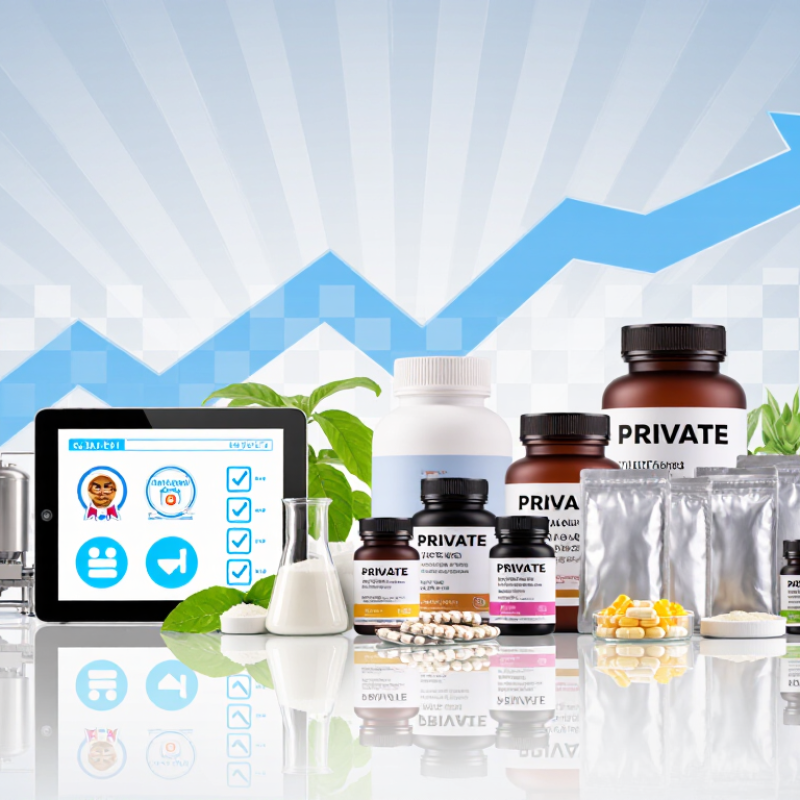
Private label supplements are products made by a specialized manufacturer and sold under another company’s name. The formula may come from an existing product or be adjusted for a specific customer. Common formats include capsules, powders, tablets, gummies, and liquid drops. The customer usually selects the ingredient profile, serving size, flavor, packaging, and label design.
The process begins with product planning. A buyer reviews the formula, ingredient sources, minimum order quantity, shelf life, and expected production time. The supplier then prepares samples for approval. Quality-focused suppliers should provide batch records, ingredient specifications, and certificates of analysis from qualified laboratories. Manufacturing should follow recognized quality systems, such as current good manufacturing practices. Testing may check identity, strength, purity, microbes, and heavy metals.
Labels require careful attention. Ingredient amounts must match the final formula, while usage directions and warnings should be clear. Health claims need reliable evidence and must follow the rules of the target market. A supplier’s certificate is useful, but it is not a complete quality guarantee. Independent verification can uncover problems that paperwork misses. The process is not perfectly linear. A flavor may need reformulation, or packaging may delay delivery. Buyers sometimes focus on price and overlook traceability, which can create expensive problems later. Careful records, retained samples, and direct communication make the relationship more dependable.
Private label supplements are products manufactured by a third-party supplier and sold under a retailer’s or brand owner’s label. The workflow typically includes formulation review, compliance checks, testing, production, and shipment.
Typical industry planning ranges are shown in weeks. Actual timing varies according to formula complexity, testing requirements, packaging, minimum order quantity, and destination-market regulations.
2026 Top Private Label Supplements Suppliers?
A reliable supplier should show more than polished product photos. Ask for current GMP certification, facility audit records, and complete batch traceability. The certificate should match the manufacturing site, not only a trading office. Request a sample batch and compare its label with the formula specification. Check identity, potency, microbiological results, allergens, heavy metals, and contaminants through an independent laboratory. Small details matter.
Review the certificate of analysis carefully. Confirm the lot number, test methods, laboratory accreditation, and release date. A vague document is a warning sign. Ask how raw materials are qualified and stored, including temperature and humidity controls. Inspect their recall process and adverse event reporting procedure. These records reveal operational maturity better than sales promises.
Regulatory compliance depends on the target market. Verify permitted ingredients, dosage limits, labeling rules, and advertising claims with qualified local specialists. Do not accept “approved everywhere” language. It is rarely accurate. Request stability data for the intended packaging and shelf life. One weakness remains easy to miss: suppliers may test finished products but overlook packaging migration risks. I would also review change-control procedures, because an unnoticed ingredient substitution can damage trust quickly. A documented quality agreement should define responsibilities, deviations, testing, complaints, and retention samples. Yet paperwork is not proof by itself. Speak with technical staff, inspect evidence, and leave room to question your first impression.
| No. | Assessment Dimension | Suggested Weight | Evidence to Request | Minimum Acceptable Benchmark | Priority |
|---|---|---|---|---|---|
| 1 | U.S. Dietary Supplement cGMP Compliance | 15% | Current cGMP certificate, inspection history, quality manual summary, corrective-action records, and facility scope. | Manufacturing and packaging controls align with FDA dietary supplement cGMP requirements under 21 CFR Part 111, with documented procedures and records. | Mandatory |
| 2 | Quality Management System | 10% | Quality policy, document-control procedure, deviation log, change-control procedure, CAPA records, and internal-audit schedule. | Controlled procedures are current, traceable, approved by authorized personnel, and supported by documented investigations and corrective actions. | High |
| 3 | Ingredient Identity and Authenticity | 12% | Ingredient specifications, supplier qualification records, identity-test methods, raw-material COAs, and representative laboratory results. | Each incoming dietary ingredient is verified against written specifications, with identity testing performed using scientifically valid methods. | Mandatory |
| 4 | Finished-Product Testing | 10% | Finished-product specifications, batch-release records, test methods, stability data, and representative COAs from recent production lots. | Release decisions are based on documented specifications covering identity, purity, strength, composition, and applicable contaminant limits. | Mandatory |
| 5 | Contaminant and Adulteration Controls | 10% | Risk-based testing plan for heavy metals, microbiological hazards, pesticides, residual solvents, allergens, and other product-specific risks. | Testing frequency and methods are justified by ingredient risk, formulation, origin, processing conditions, and applicable legal or customer specifications. | Mandatory |
| 6 | Third-Party Certification | 8% | Current certificate and scope for an accredited food-safety or supplement-quality standard, plus the latest audit summary and open findings. | Independent certification is current, covers the actual manufacturing site and product scope, and has no unresolved critical findings. | Recommended |
| 7 | Supply-Chain Traceability | 8% | Lot-coding procedure, one-step-back and one-step-forward traceability records, approved-supplier list, and mock-recall results. | Finished goods can be linked to production records and raw-material lots; the supplier can demonstrate a documented recall and withdrawal process. | High |
| 8 | Stability and Shelf-Life Support | 7% | Real-time or accelerated stability protocol, storage conditions, packaging compatibility data, and expiration-date rationale. | Shelf life is supported by documented stability evidence appropriate to the dosage form, ingredients, packaging, and intended storage conditions. | High |
| 9 | Label and Claims Compliance | 8% | Label review checklist, Supplement Facts panel, ingredient nomenclature review, claim substantiation file, and notification procedures where applicable. | Labels are reviewed against applicable requirements, including 21 CFR Part 101.36; structure/function claims have substantiation and required disclaimers where applicable. | Mandatory |
| 10 | New Dietary Ingredient Review | 4% | Ingredient history of use, safety rationale, regulatory assessment, and evidence of an FDA notification when required. | Ingredients are screened to determine whether a New Dietary Ingredient notification or other regulatory action may be required before marketing. | Mandatory |
| 11 | Allergen and Cross-Contact Management | 4% | Allergen policy, facility zoning plan, cleaning validation or verification records, label controls, and cross-contact risk assessment. | Major food allergens and cross-contact risks are identified, controlled, documented, and reflected accurately in product labeling where applicable. | High |
| 12 | Complaint, Adverse Event, and Recall Readiness | 4% | Complaint-handling SOP, adverse-event escalation procedure, recall plan, contact tree, and sample investigation records. | Safety complaints are documented, investigated, escalated, and retained according to written procedures; serious adverse events can be reported within applicable legal timelines. | Mandatory |
In 2026, private label supplement sourcing will favor suppliers with reliable manufacturing systems, not simply low prices. Turnkey contract manufacturers may lead because they combine formulation, production, packaging, and fulfillment. Specialized ingredient suppliers will remain important for evidence-based extracts, minerals, probiotics, and sports nutrition inputs. Smaller regional laboratories may also gain attention when buyers need flexible minimum orders and faster communication.
North America is likely to lead in scalable production and direct-to-consumer support. Europe may remain strong in documentation, quality control, and ingredient traceability. Asia-Pacific suppliers could offer competitive production capacity, especially for packaging and high-volume manufacturing. However, these regional strengths overlap. No region wins every category. Forecasts can be wrong, especially when shipping costs, regulations, or raw material shortages change quickly.
Tips: Ask for recent certificates, batch-specific testing, allergen controls, stability data, and a clear recall procedure. Request a production sample before signing a large order. Review the certificate of analysis carefully, not just the product brochure. Experienced buyers should also audit communication speed and change-control practices. A supplier that answers slowly during sampling may create bigger problems after launch. Cost still matters, but the cheapest quote often hides testing, packaging, or lead-time compromises.
Choosing a private label supplement supplier in 2026 requires more than comparing catalog prices. Start with the formula. Ask whether ingredients have documented identities, tested potency, and clear dosage logic. A protein powder should show protein per serving, not only total blend weight. Capsules need the exact amount of each active ingredient. Vague proprietary blends deserve careful review.
Certifications should match your market and product risk. Request current GMP documentation, audit details, allergen controls, and certificates of analysis from independent laboratories. Check whether testing covers heavy metals, microbes, identity, and contaminants. Do not accept a certificate dated two years ago. Ask how failed batches are handled. Good suppliers answer precisely, even when the answer is inconvenient.
Pricing needs a wider lens. Compare formula cost, packaging, testing, setup fees, storage, shipping, and relabeling charges. A low quote can become expensive after freight and revisions. Request a sample invoice with 1,000 bottles and 5,000 bottles. Then compare the landed cost per unit. Minimum orders also affect cash flow. Some suppliers require 10,000 units, while others allow a 500-unit pilot run. Smaller orders may cost more per bottle, but they reduce inventory risk. I have seen buyers focus on unit price and overlook expiration dates, lead times, and damaged cartons. That comparison was incomplete. Ask for written production timelines, retain samples, and a clear process for formula changes. Suppliers should provide evidence, not polished promises.
Choosing a private label supplement supplier requires more than comparing prices. Start with documented quality systems, relevant certifications, and independent laboratory testing. Ask for recent certificates of analysis for each finished product. Check whether results cover identity, purity, contaminants, and potency. A reliable supplier should explain testing methods clearly. Vague answers deserve attention.
Review the supplier’s manufacturing site, batch records, stability data, and recall procedures. Confirm minimum order quantities, production timelines, packaging options, and storage conditions before signing. Written change-control rules can prevent unexpected formula or label changes. Keep communication practical. Test response times with specific questions. Small delays may reveal larger management problems.
No supplier is perfect. Even a strong facility can miss a deadline or provide incomplete paperwork. Build inspection rights, corrective-action steps, and termination terms into the agreement. Monitor every shipment through lot numbers, sample checks, and retained records.
Product claims must remain accurate and comply with the regulations in each sales market. Avoid relying only on a polished presentation. Visit the facility when possible, review customer references, and compare promised processes with actual evidence. The best partnership develops through regular reviews, honest reporting, and a willingness to question comfortable assumptions.
They are products made by a specialized manufacturer and sold under another company’s name. Formats include capsules, powders, tablets, gummies, and liquid drops. The buyer usually chooses the formula, serving size, flavor, packaging, and label design.
It starts with product planning. The buyer reviews ingredients, minimum order quantities, shelf life, and production time. The supplier provides samples for approval. Formulas may need changes before production.
Request batch records, ingredient specifications, and certificates of analysis. Confirm the lot number, test methods, laboratory details, and release date. A vague certificate needs closer questioning.
Testing may check identity, strength, purity, microbes, heavy metals, allergens, and contaminants. Independent laboratory testing offers stronger verification. Paperwork alone is not enough.
Request current good manufacturing practice certification and facility audit records. Confirm the certificate matches the actual manufacturing site. Ask about raw material storage, temperature, humidity, and traceability.
Labels should show accurate ingredient amounts and clear serving directions. Warnings must be easy to notice. Health claims need reliable evidence and must follow the target market’s rules.
Yes. A flavor may need reformulation, or packaging may delay delivery. Ingredient substitutions can happen without strong change controls. I would not assume the timeline is fixed.
Retained samples help investigate complaints or quality concerns. Recall procedures show how quickly affected batches can be identified. Direct communication also makes problems easier to manage. No checklist is perfect.
Private Label Supplements are products manufactured by a qualified third-party facility and sold under a retailer’s or company’s own brand. A successful program begins with understanding the manufacturing process, formula development, packaging options, and quality-control responsibilities. Businesses should assess suppliers through documented testing, ingredient traceability, facility standards, transparent labeling practices, and compliance with applicable safety and regulatory requirements.
In the 2026 market, supplier selection may involve domestic and international manufacturers, specialized laboratories, and large-scale production facilities. Buyers should compare formula flexibility, certifications, testing procedures, pricing, lead times, minimum order quantities, packaging services, and communication standards. The best supplier is not always the least expensive; reliability, consistency, scalability, and clear documentation are equally important. After choosing a partner, companies should establish written specifications, approval procedures, quality agreements, inventory plans, and regular performance reviews to maintain product quality and support long-term growth.